How to Unclog a Drain Naturally: 5 Methods That Actually Work
Most clogs don’t require a plumber or a bottle of caustic chemicals. The five methods below cover the full range of common blockages — from hair and debris to grease and soap buildup — using tools or household ingredients most people already have.
Five Methods for Clearing a Clogged Drain Without Chemicals
These methods split into two categories: mechanical fixes for solid blockages, and chemical or enzymatic approaches for buildup. Knowing which type of clog you’re dealing with is the fastest way to pick the right method — though combining them in sequence works well when you’re not sure.
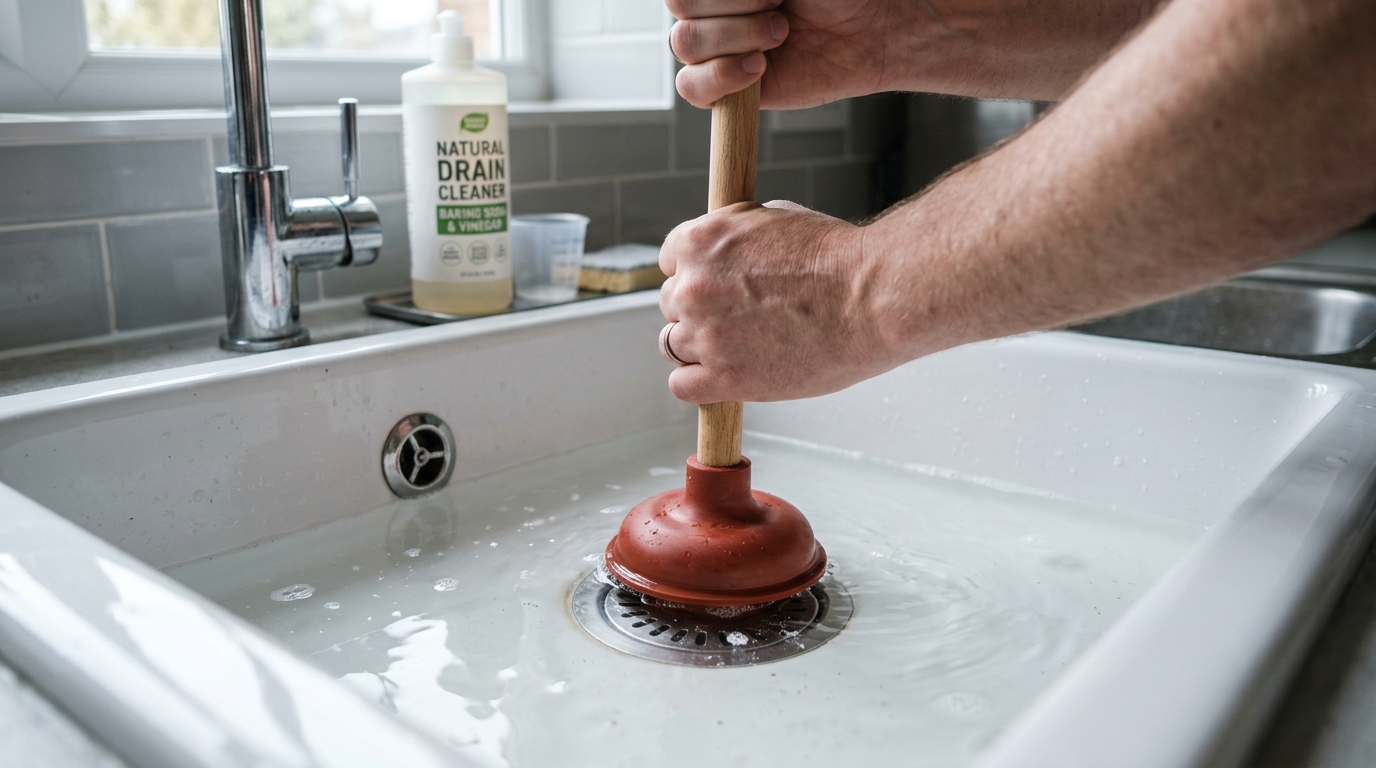
1. Plunger or drain snake is the most direct fix for a physical blockage — hair, food debris, or anything solid stuck in the pipe. Place a cup plunger over the drain opening, press down to create a seal, and push and pull with firm, steady strokes for 20–30 seconds. Run water to check whether the drain has cleared. If it hasn’t, feed a drain snake into the pipe, rotate it to catch the blockage, and pull it out.
2. Boiling or very hot water works well when grease or soap buildup is slowing the drain. Boil a full kettle, or heat the water to just below boiling if you have PVC pipes. Pour it directly into the drain in two or three slow, steady pours, pausing 30 seconds between each, then run the tap to confirm the drain is moving freely.
3. Baking soda and vinegar uses a fizzing reaction to loosen buildup along the pipe walls. Pour ½ cup of baking soda directly into the drain, follow immediately with ½ cup of white vinegar, and cover the drain opening with a cloth or stopper to push the reaction downward. Wait 15–30 minutes, then flush with hot water. If the drain is still slow, repeat once before trying a different method.
4. Enzyme-based drain cleaner is the non-caustic store-bought option for stubborn buildup or regular maintenance. Common brands include Bio-Clean and Green Gobbler Enzyme, both available at most hardware and grocery stores. Follow the product’s dosage instructions, pour the recommended amount into the drain, and let it work overnight — or for the minimum time listed on the label. Flush with warm water in the morning.
5. Prevention cuts down on how often any of these fixes are needed. Put a mesh drain strainer over kitchen and bathroom drains to catch hair, food particles, and debris. Flush drains with hot water for 30–60 seconds after each use. Run the baking soda and vinegar method once a month as a maintenance flush, even when the drain looks fine. Don’t pour cooking grease or oil down the drain — pour it into a sealed container and throw it away.
Matching the Method to the Blockage and Your Situation
The right method depends on three things: what’s causing the clog, how quickly you need the drain usable, and what you have on hand.
For solid blockages — hair, food debris, a physical obstruction — a plunger or drain snake is the right tool. Baking soda and vinegar or an enzyme cleaner won’t do much against something solid. For grease or soap accumulation, the reverse is true: hot water, baking soda and vinegar, or an enzyme cleaner will work where a plunger won’t.
Speed matters too. Hot water and a plunger work immediately. Enzyme cleaners need to sit overnight, so if the drain needs to be usable within the hour, they’re not the right choice. If you have no tools and nothing to buy, hot water alone requires nothing prepared or purchased. If you want a store-bought product without caustic chemicals, an enzyme-based cleaner is the answer.
When you’re not sure what type of clog you’re dealing with, combining methods in order — baking soda and vinegar first, then a hot water flush — can clear a slow drain better than either method on its own. A slow-moving drain is also one of the common plumbing issues homeowners ignore until they become costly repairs, so addressing it early is worth the effort.
When Natural Drain Cleaners Make Sense
These methods are worth reaching for when a sink is draining slowly before a full clog has developed, when you’re avoiding chemical drain products for safety or environmental reasons, when a clog has appeared and you don’t have quick access to a hardware store, or when you want to do routine maintenance to stop buildup from accumulating over time. Drain maintenance pairs well with a broader seasonal home maintenance routine that keeps small problems from turning into expensive ones.
Matching the Fix to the Clog Before Calling a Plumber
The key decisions are clog type and timing: use a plunger or snake for solid blockages, and baking soda and vinegar or an enzyme cleaner for grease and soap buildup. For PVC pipes, stop short of boiling water. If you have nothing on hand, hot water alone is a starting point. If none of these methods clear the drain, calling a plumber is the right next step — before a minor clog turns into a costly repair. If you’re unsure what that might cost, reviewing how much a plumber costs in 2026 can help you set realistic expectations before you make the call.