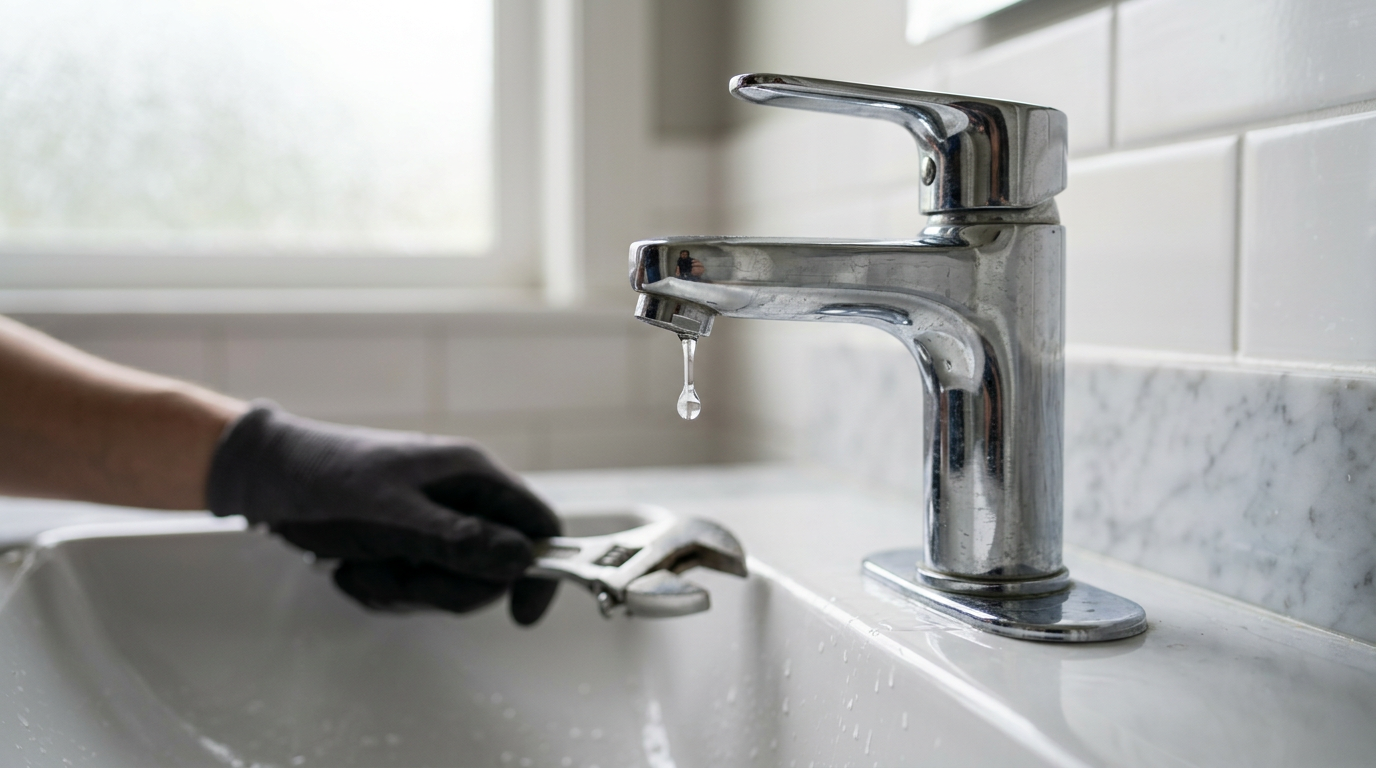
Most dripping faucets come down to one worn part — a cartridge, O-ring, washer, or seat gasket — and replacing it doesn’t require a plumber. The repair follows three steps: shut off the water supply, find the worn part, and replace it.
How to Diagnose the Drip Before You Disassemble Anything
Where the water appears tells you which part has failed and how far you need to take things apart. If water drips from the spout tip, the cartridge, washer, or seat gasket is likely the problem — these sit deeper in the valve body. If water seeps from around the handle base or spout body, a worn O-ring is probably to blame, and it sits close enough to the surface that you won’t need to pull the full cartridge.
Getting this right before you start matters. Diagnosing the drip location prevents unnecessary teardown — you’re not pulling out a cartridge when only an O-ring needs replacing. It also affects cost. O-rings and washers cost under a dollar and take minimal disassembly. A cartridge replacement means pulling the entire cartridge body, matching it to your faucet brand and model, and buying a part that can run anywhere from $10 to $40 or more depending on the manufacturer. If you’re unsure whether the issue is isolated to the faucet or part of a broader problem, it’s worth learning how to detect a water leak in your home before you start disassembling anything.
How to Fix a Dripping Faucet
Shut off the water supply. Turn off the shutoff valves under the sink — one for hot, one for cold — by rotating them clockwise until they stop. Then turn on the faucet to release any pressure left in the line before you do anything else.
Identify the source of the drip. Confirm whether water is coming from the spout tip or from around the handle base or spout body. This tells you which part to replace and how far you need to disassemble.
Remove the faucet handle. Pry off the decorative cap on top of the handle to expose the screw underneath. Remove the screw with a Phillips or flathead screwdriver, then pull the handle straight up and off the stem.
Access the internal component. Unscrew the packing nut with an adjustable wrench to reach the stem or cartridge body underneath. On ball-type faucets, you’ll find a ball assembly with springs and seats. On cartridge faucets, the cartridge slides out once you remove a retaining clip.
Replace the worn part. Pull out whichever part matches the source of your drip — cartridge, O-ring, washer, or seat gasket. Bring the old part to the hardware store to get an exact match. If you’re replacing a cartridge, note the faucet brand and model, since cartridges are brand- and model-specific. While you have the valve open, inspect the seat surface. If it’s pitted or corroded, a new washer or cartridge will still leak — catching seat wear now prevents you from doing the same repair twice.
Reassemble the faucet. Seat the new part, replace the packing nut, and hand-tighten it before giving it a quarter-turn with a wrench. Don’t overtighten, as that can damage the new part or the valve seat. Reattach the handle, turn the water back on at the shutoff valves, and check for drips.
Cartridge Replacement vs. O-Ring or Washer Swap
The repair path depends on where the leak is coming from. Cartridge replacement is the standard fix for spout-tip drips on single-handle faucets. It involves pulling the entire cartridge body out of the valve housing. Because cartridges are brand- and model-specific, bring the old one to the hardware store or look up your faucet brand before buying a replacement.
When the leak comes from around the handle base or spout body, the worn part is usually an O-ring or seat gasket. This repair doesn’t require full cartridge removal, and the damaged part is usually visible and easy to reach once the handle is off. For context on what this kind of repair costs if you decide to call in a professional instead, see this guide on how much a plumber costs in 2026.
What to Do If the Faucet Still Drips After the Repair
If the dripping continues after replacing the cartridge, the valve seat is probably worn rather than the new part. Most faucet leaks come down to two things: the cartridge and the seat. Replacing the cartridge fixes the first; inspecting and addressing seat wear during the same disassembly fixes the second. Dealing with both at once is what actually resolves the problem rather than buying temporary relief. A persistent drip that goes unaddressed can also contribute to wider water damage over time — understanding the plumbing issues homeowners most commonly ignore can help you catch related problems before they escalate.