Roof Repair vs. Replacement: How to Know Which One You Actually Need
The decision between repairing and replacing a roof comes down to three things: repair cost relative to full replacement cost, roof age, and how much of the roof is damaged. Measured against each other, these factors produce a clear answer in most cases — and specific benchmarks, including the point where repair costs reach 30%–50% of replacement cost, make that comparison concrete rather than a matter of guesswork.
Repair vs. Replacement: What the Numbers Actually Mean
Roof repair and roof replacement solve different problems. Repair addresses a specific, bounded issue on an otherwise functional roof — a few missing shingles, a single leak, a failed flashing section. Replacement removes and rebuilds the entire roofing system. The practical difference is scope, cost, and outcome: repair extends an existing roof’s life, replacement resets it entirely.
Full roof replacement typically runs $5,000–$15,000 depending on size and materials. That range sets the baseline for the cost comparison. When repair estimates climb to $1,500–$7,500 on a roof that would cost $10,000–$15,000 to replace, the math shifts toward replacement. That 30%–50% threshold is the tipping point — not a hard cutoff, but the range where continued repair spending stops being recoverable. For a detailed breakdown of what replacement actually costs by material and roof size, see this roof replacement cost guide with 2025 pricing by material.
The threshold matters because the same dollar figure carries different weight depending on how much roof life remains. A $4,000 repair on a 5-year-old roof spreads that cost across meaningful remaining lifespan. The same repair on a 25-year-old roof delivers almost no return before replacement becomes necessary anyway. Cost alone doesn’t tell you which side of the line you’re on — age and remaining lifespan do.
How Roof Age and Remaining Lifespan Drive the Decision
Roof age is the primary factor in this decision. Most asphalt shingle roofs last 20–30 years. If a roof is within 5 years of that range, putting money into repairs rarely makes sense regardless of how much damage there is — replacement delivers better long-term value at that stage.
A roof under 10 years old with localized damage should be repaired. The remaining lifespan justifies the cost. At the other end, when cumulative repair costs over recent years have already passed 30% of replacement cost, continued repairs rarely pay off. Each additional repair adds cost without resetting the lifespan, which makes replacement the more cost-effective long-term decision.
For roofs in the middle range — roughly 10 to 20 years old — the repair-or-replace question depends on damage scope and where repair estimates land relative to replacement cost. Repair costs under $1,500 on a roof with 10 or more years of life left are almost always worth addressing. Beyond that, the cost threshold and damage scope need to be evaluated together.
How Damage Scope Changes the Repair Cost Calculation
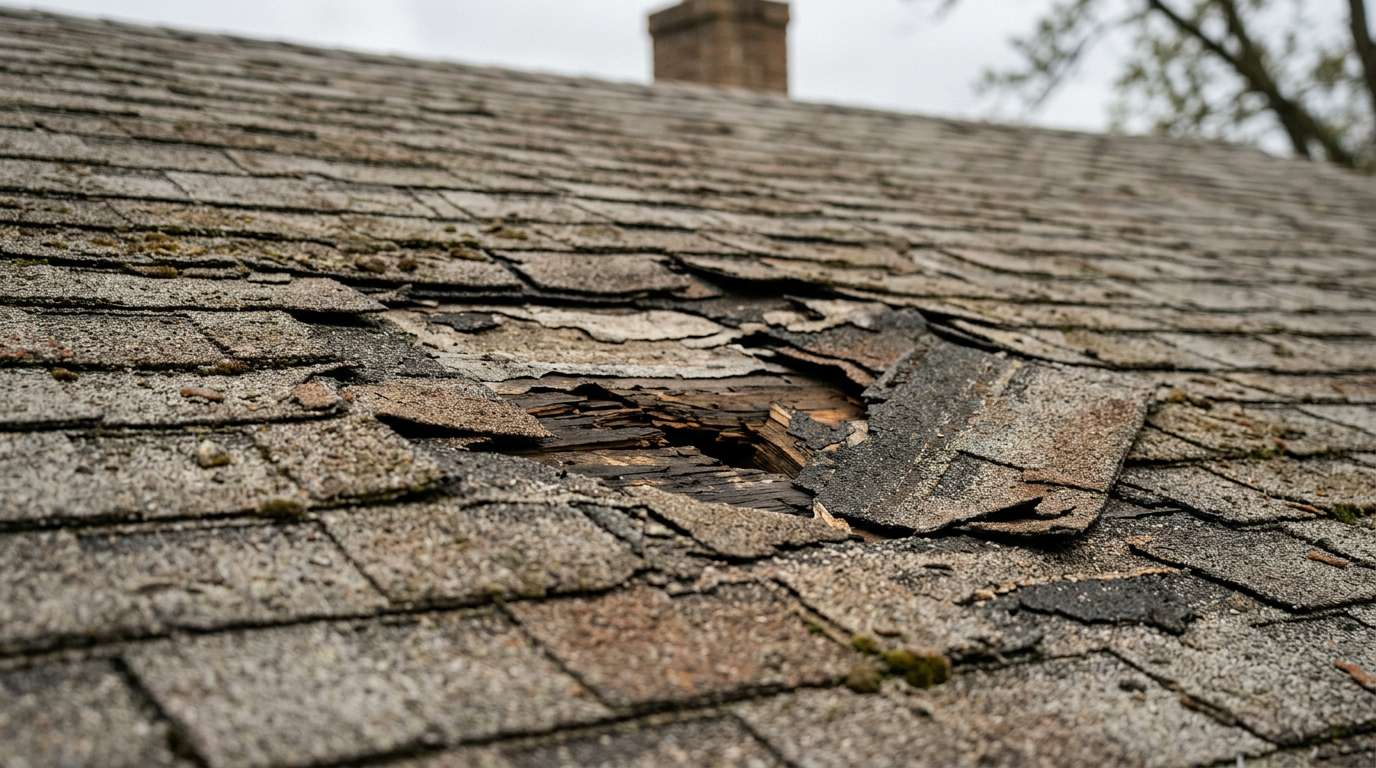
Damage scope affects the decision in a way that dollar figures alone can’t capture. Isolated damage — a failed section, missing shingles, a single leak — keeps repair costs predictable. A single problem area can be priced and fixed with confidence, and the rest of the roof remains structurally sound.
Widespread deterioration across multiple sections works differently. When damage covers more than 30% of the roof surface, repair costs compound quickly and rarely address the underlying decline. Repair estimates on deteriorating roofs also tend to miss the full scope, which makes replacement the more financially reliable option. Structural damage puts a roof beyond practical repair regardless of cost. Knowing the specific warning signs that indicate a roof needs full replacement can help you assess whether deterioration has already crossed that line before you request estimates.
The implication is that scope has to be assessed before the cost threshold comparison means anything. A $3,000 repair estimate on a localized problem and a $3,000 estimate on a roof with deterioration across multiple areas represent completely different situations, even though the number is the same.
How to Use the 30%–50% Threshold as a Decision Benchmark
The cost threshold works as a guardrail, not a formula. To apply it, compare your repair estimate against what full replacement would cost on the same roof. If the estimate is well below 30% of replacement cost and the roof has meaningful life remaining, repair is the straightforward choice. If it’s approaching or exceeding 50%, replacement is almost always the better financial decision.
The threshold becomes most useful when combined with age. A repair estimate at 35% of replacement cost looks different on a 12-year-old roof than on a 24-year-old one. On the younger roof, the remaining lifespan makes that repair recoverable. On the older one, it probably isn’t — and the next repair will bring the cumulative total even higher.
Widespread deterioration removes the threshold from the equation entirely. When damage scope is broad enough, repair isn’t a viable option regardless of where the estimate lands.
How Age, Cost, and Scope Work Together to Make the Call
Start with age. If the roof is within 5 years of the end of its expected lifespan, replacement is the answer regardless of what the repair estimate says. If the roof is under 10 years old with localized damage, repair is the answer regardless of cost — as long as the estimate stays well below the replacement threshold.
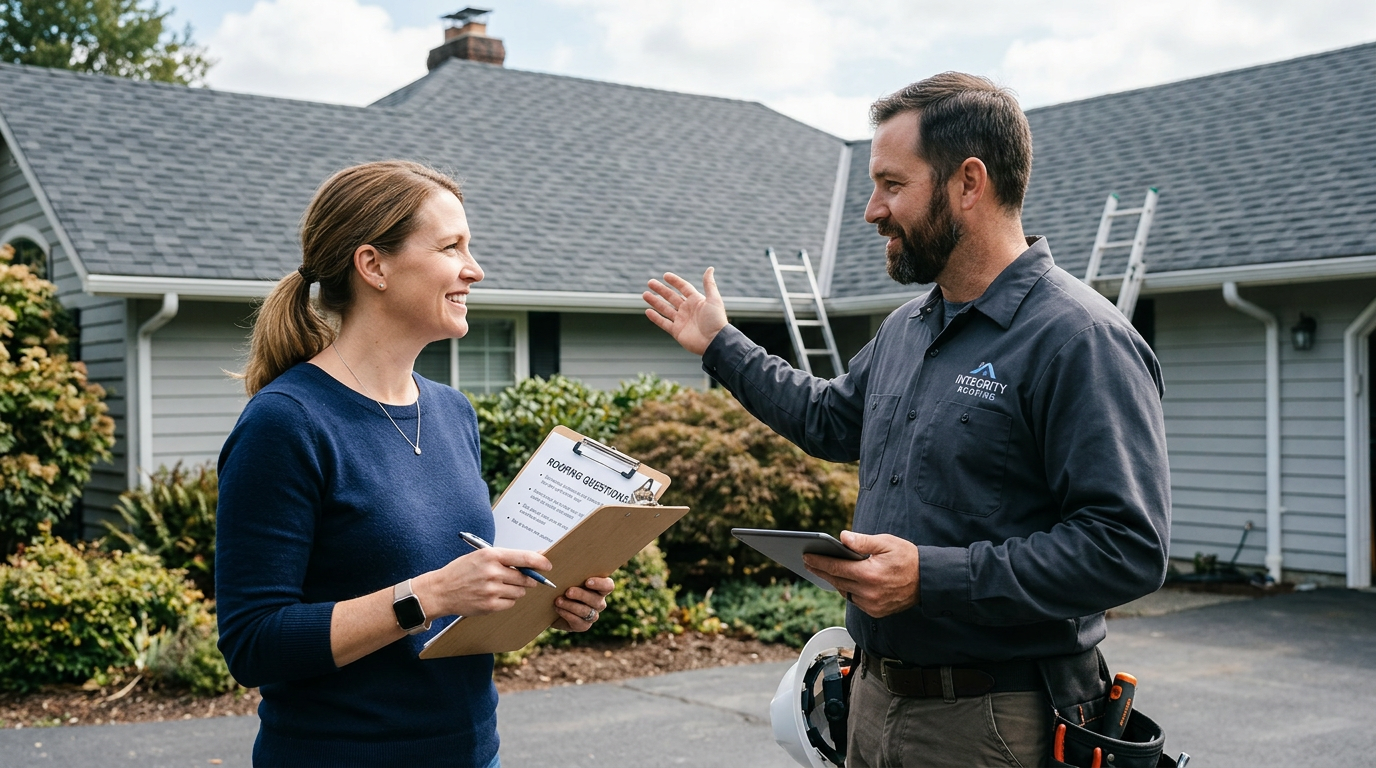
For everything in between, apply the cost threshold against the damage scope. Isolated damage with repair costs below 30% of replacement value favors repair. Repair costs above 50% of replacement value, widespread deterioration, or cumulative past repairs that have already crossed the threshold all point toward replacement. Remaining lifespan makes the final call when the numbers land in the middle. Before committing to either option, it’s worth reviewing the key questions to ask a roofer before hiring to make sure you’re getting accurate assessments and comparable quotes.
Letting Remaining Lifespan Make the Final Call
The 30%–50% cost threshold and the damage scope assessment are the right tools for this decision, but remaining lifespan is what determines whether a repair investment is recoverable at all. A 25-year-old roof with modest visible wear is often closer to replacement than it appears. Widespread deterioration removes the choice. When repair estimates are climbing and the roof is aging out of its useful range, the math rarely favors continued patching — and each additional repair that doesn’t reset the lifespan makes the next one harder to justify. Get repair and replacement estimates for your specific roof, then measure both against where the roof actually stands in its lifespan.