Older homes follow predictable electrical patterns — wiring types, panel configurations, and outlet conditions that reflect construction standards from decades past. Understanding which problems are most common, how to recognize them, and how urgently each one needs attention helps you assess what you’re dealing with and when to call a licensed electrician.
Wiring: Knob and Tube and Aluminum
The two wiring types most likely to appear in older homes are also the ones that carry the highest safety risk. Knob and tube wiring, used in homes built before the 1950s, runs individual conductors through ceramic knobs and tubes with no ground wire. It was never designed for modern electrical loads, and its insulation becomes brittle and cracks over time — a direct fire hazard. Homes with active knob and tube wiring need a professional evaluation and, in most cases, full replacement.
Aluminum wiring was common in homes built between the mid-1960s and mid-1970s. It expands and contracts more than copper, which causes connections to loosen over time and creates heat buildup at outlets and switches. That makes it a recognized fire risk, particularly at connection points. Any home with aluminum wiring should be assessed by a licensed electrician to determine whether it needs remediation or full replacement.
Both wiring types carry active fire and safety risks tied to their physical condition, which makes them higher-priority concerns than panel capacity problems.
Fuse Boxes and Undersized Panels
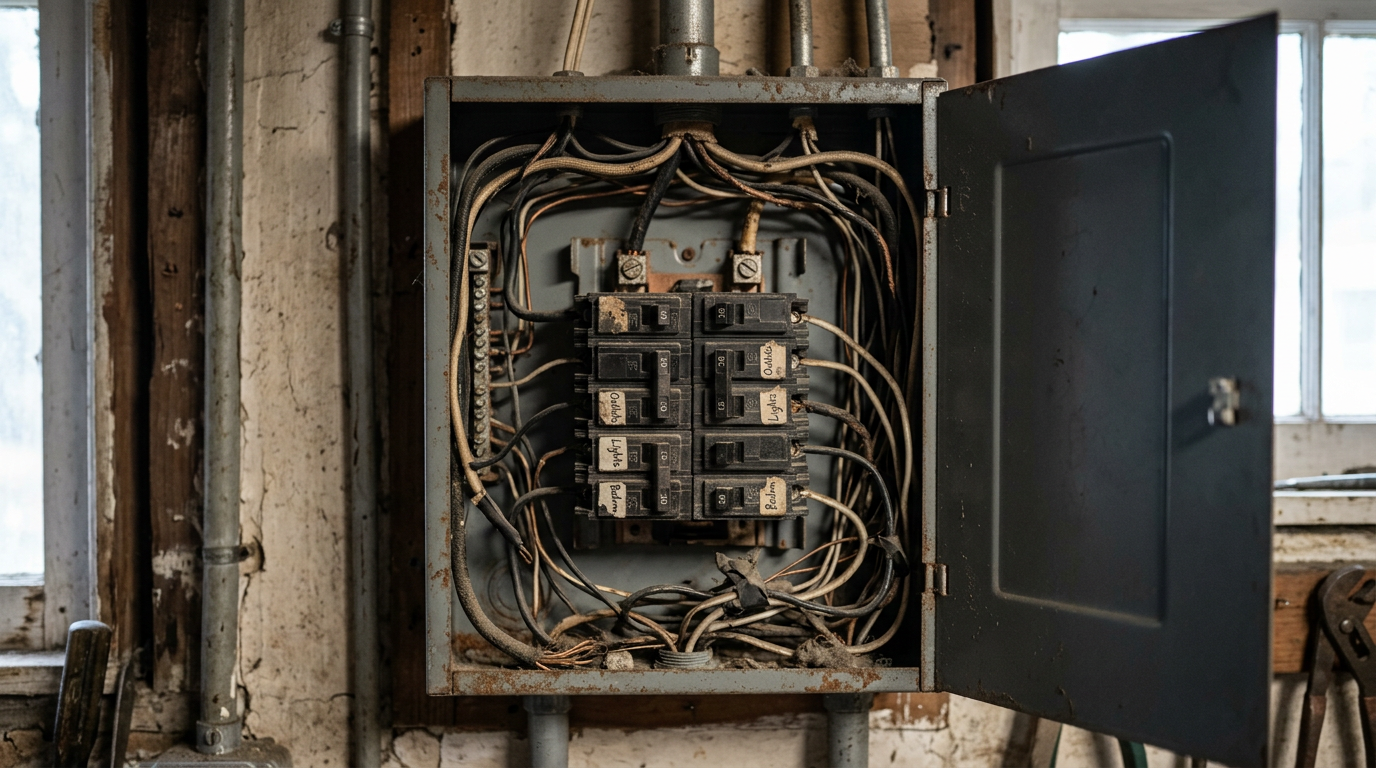
Many older homes still have fuse boxes instead of circuit breaker panels. Fuse boxes aren’t inherently dangerous, but they’re often too small for modern electrical demand and require manual fuse replacement every time a circuit overloads. A fuse box is a strong candidate for a panel upgrade, and an electrician can confirm whether the current setup can handle the home’s load.
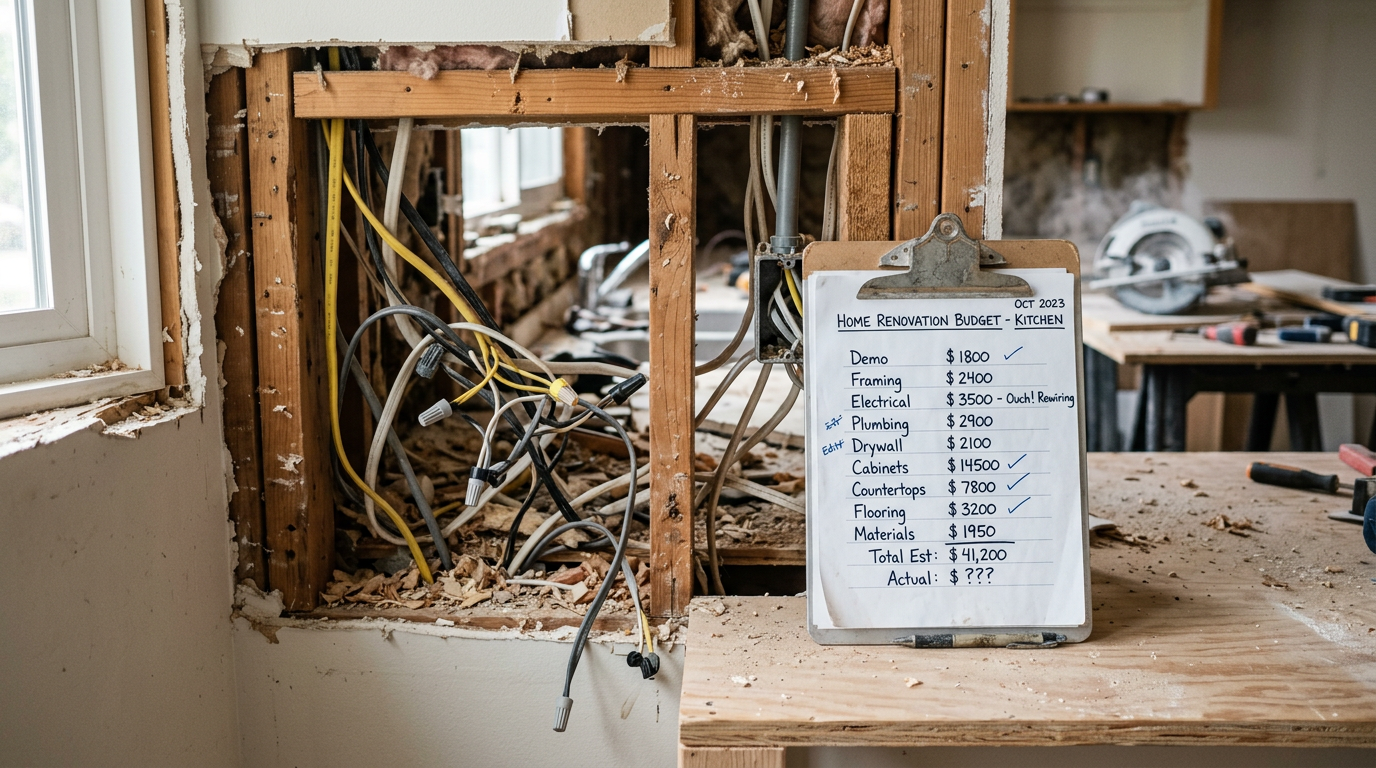
Older circuit breaker panels present a related but distinct problem. Panels rated at 60 or 100 amps — common in homes wired decades ago — often can’t keep up with the 150 to 200 amps most modern homes need to support appliances, HVAC systems, and electronics. Chronic overloading is the result. Panel upgrades are one of the most common electrical improvements made in older homes. If you’re planning broader work alongside an electrical upgrade, understanding what drives home renovation costs can help you build a more accurate budget before work begins.
Blown fuses and tripped breakers point to the same underlying cause — a circuit carrying more load than it was built for — but they reveal different things about the home’s infrastructure. Blown fuses confirm the home still has a fuse box, which is more likely to need a full upgrade. Tripped breakers suggest a circuit breaker panel that may simply be undersized.
Outlet Problems: Ungrounded and Dead
Two-prong outlets have no ground wire, which means they offer no protection against electrical surges or faults. They’re standard in homes wired before grounding became common practice and are one of the most frequently encountered outlet problems in older construction. Fixing them means either rewiring or installing GFCI outlets as an alternative.
Dead outlets — those that don’t deliver power at all — are also common. The cause is usually a failed connection, a tripped GFCI outlet elsewhere on the circuit, or deteriorated wiring at the outlet itself. Some of these are straightforward fixes, but dead outlets in multiple locations warrant a professional inspection. That pattern can indicate wiring degradation rather than an isolated failure.
Of the two, dead outlets carry more immediate urgency. Two-prong outlets are a persistent safety gap but aren’t typically an emergency unless combined with other wiring concerns.
Symptoms That Point to Deeper Problems
Flickering or dimming lights and frequently tripped breakers are the most visible warning signs in older homes, and both tend to point back to infrastructure problems rather than isolated fixture or circuit issues.
Lights that flicker or dim intermittently often indicate loose wiring connections, deteriorating knob and tube or aluminum wiring, or an overloaded circuit. A single flickering bulb may be a fixture issue, but flickering across multiple rooms or tied to appliance use typically signals a wiring or panel problem. Breakers that trip repeatedly mean a circuit is being asked to carry more than it was built for — usually the result of an undersized panel, outdated wiring, or circuits that were never designed for modern appliances. Resetting and moving on isn’t a fix; it’s a reason to look at the underlying infrastructure.
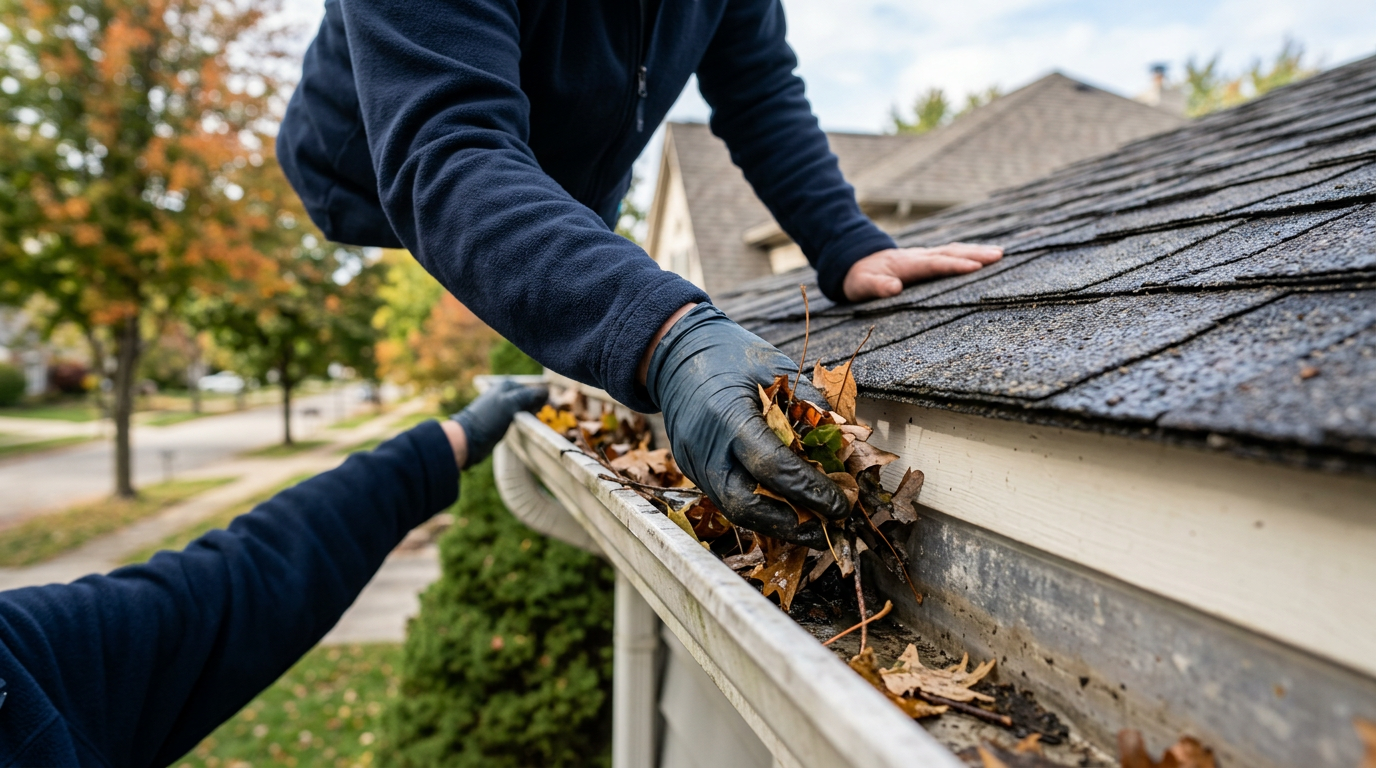
These symptoms matter because they connect visible behavior to root causes. Flickering lights and tripped breakers aren’t problems in themselves — they’re indicators of the wiring and panel conditions described above. A seasonal home maintenance checklist can help you track these warning signs alongside other systems in the house so nothing gets overlooked between inspections.
How to Prioritize What You’re Dealing With
Not every electrical problem in an older home demands the same response. Knob and tube wiring, aluminum wiring, and failing panels need professional assessment without delay. Two-prong outlets and flickering lights are warning signs worth addressing on a reasonable timeline. Dead outlets in multiple locations fall closer to the urgent end, since they may indicate active wiring failure.
If a fuse box is present, the panel and service capacity questions come first — blown fuses showing up repeatedly are a direct signal that the system can’t keep up with the home’s demand. If a specific symptom brought you here, flickering lights and tripped breakers are the place to start, then trace backward to the wiring or panel condition most likely causing them. For a full home assessment, the problems above cover three distinct layers: wiring condition, panel and service capacity, and outlet and circuit performance.
When to Call a Licensed Electrician for Older Home Wiring
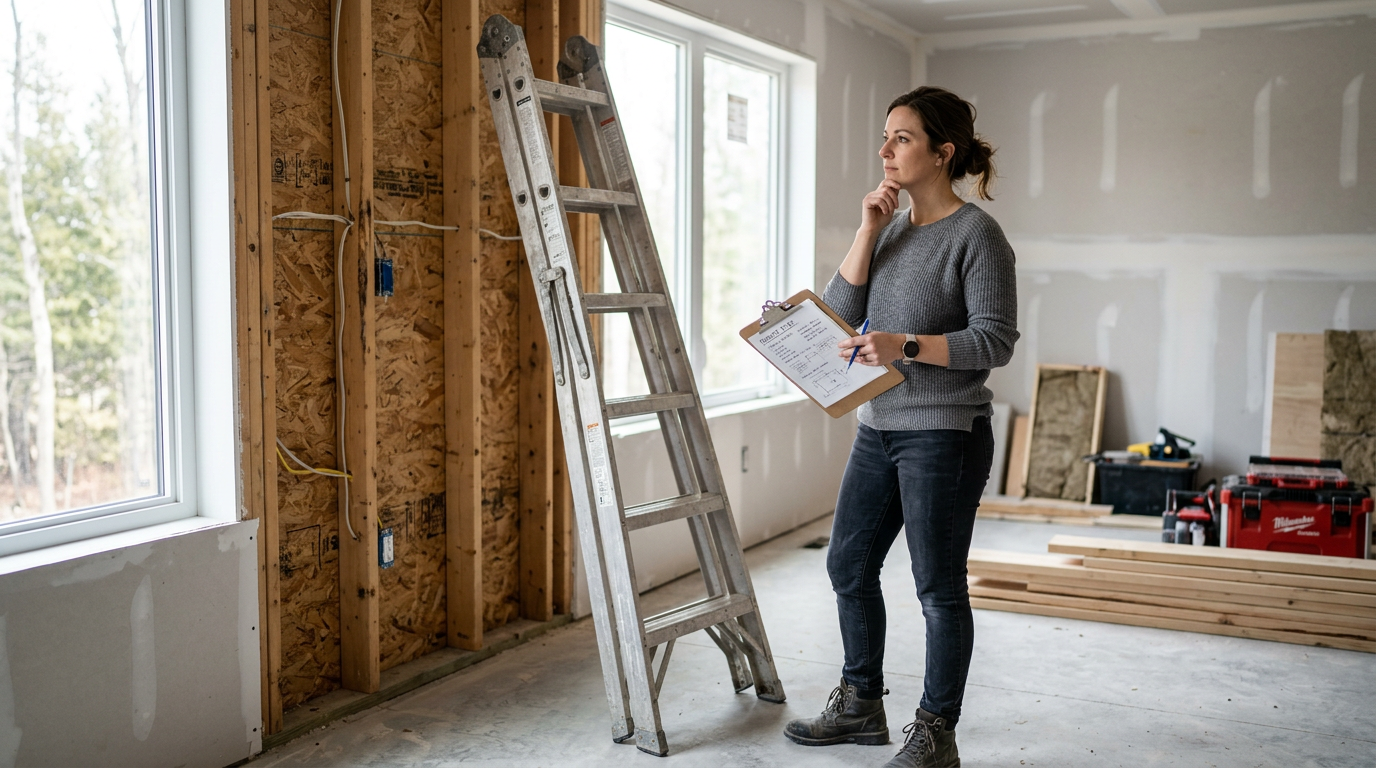
Knob and tube wiring, aluminum wiring, and undersized or outdated panels are the highest-priority concerns — all three carry active fire or safety risks and none can be properly evaluated without a licensed electrician. Dead outlets across multiple locations warrant prompt inspection. Two-prong outlets and intermittent flickering are real problems but allow more time. Before hiring anyone for electrical work, knowing what questions to ask a contractor before hiring can help you verify licensing, insurance, and relevant experience. The common thread across all of it: none of these issues resolve on their own, and a licensed electrician is the right next call regardless of where on the priority scale the problem falls.