Why Is My AC Blowing Warm Air? Common Causes and Fixes
An AC blowing warm air almost always comes down to one of five things. The causes are ordered here from fastest to check to most involved, so most people will either solve the problem or rule it out before reaching the harder ones.
Thermostat Settings: Mode, Temperature, and Fan
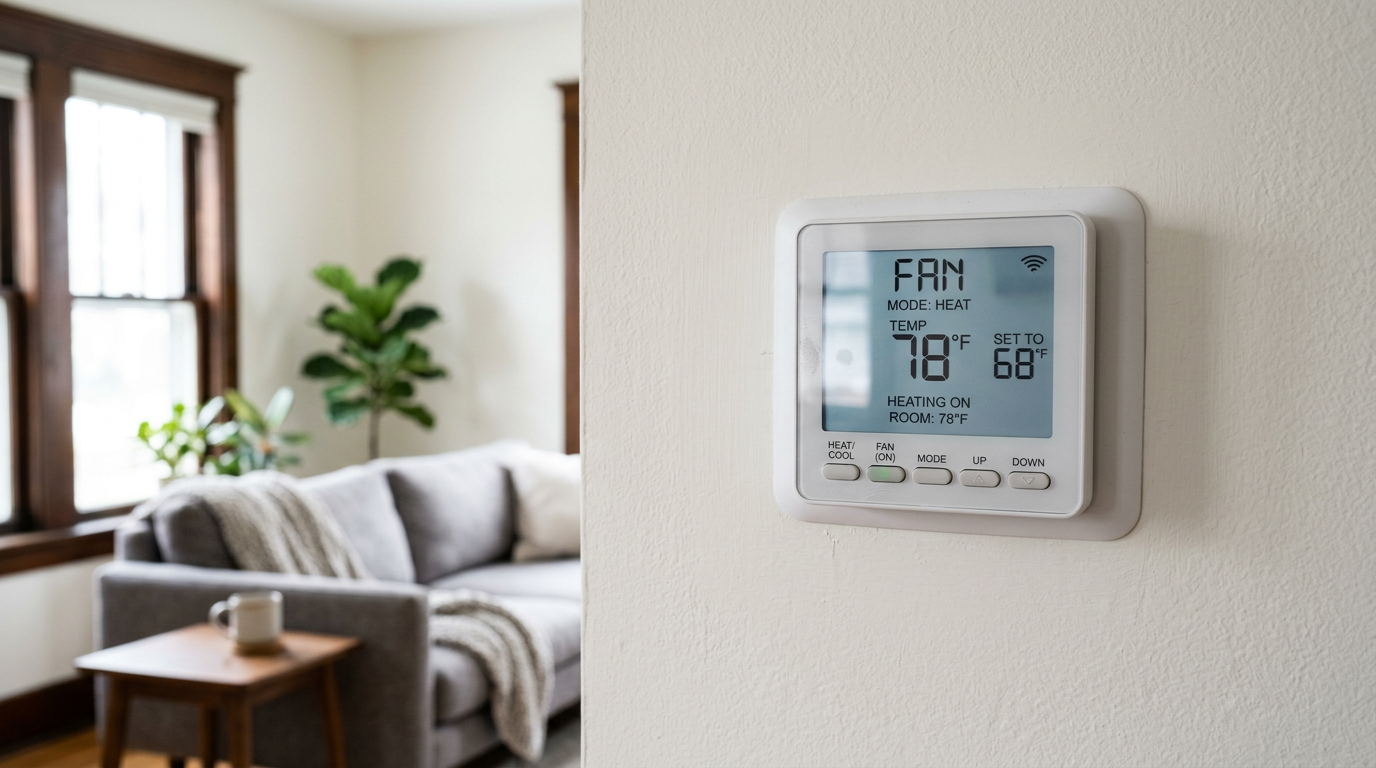
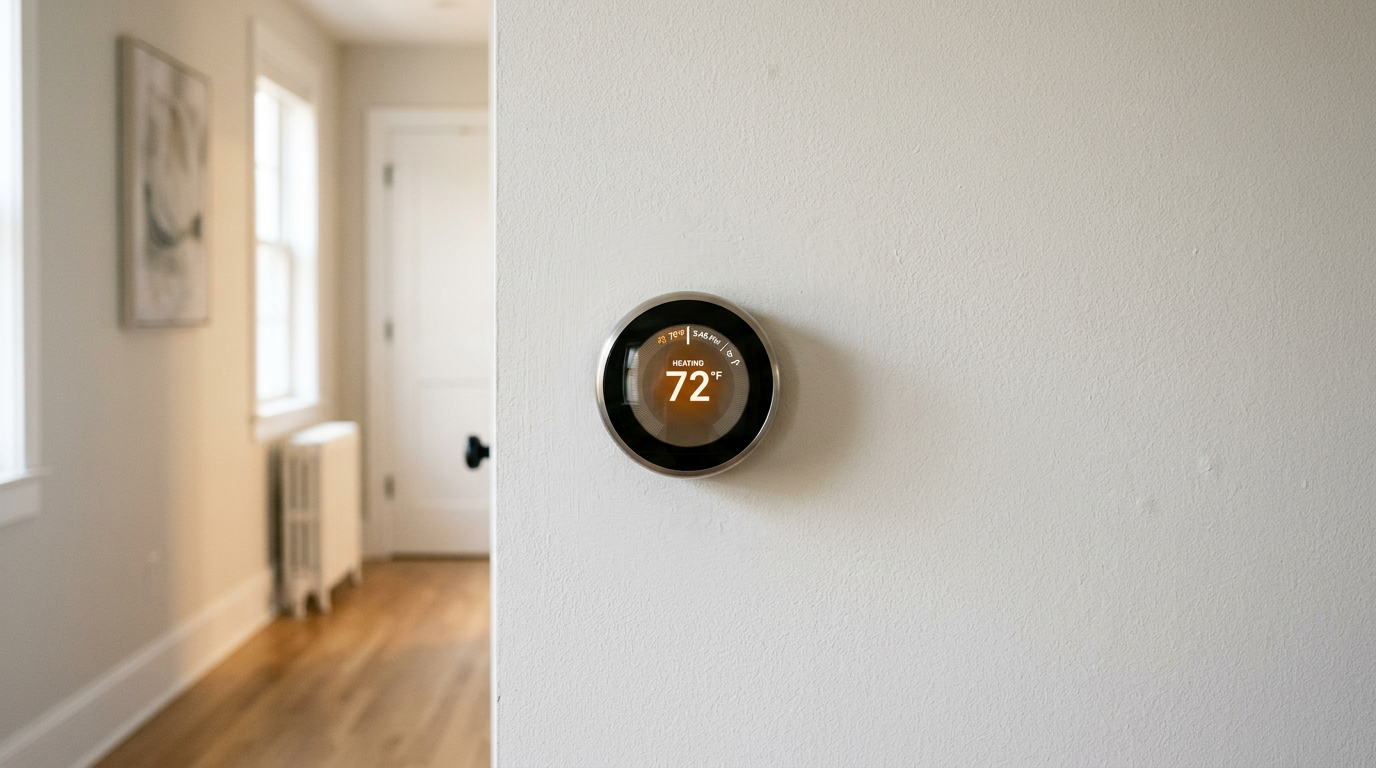
The most common reason an AC blows warm air is a thermostat set to heat instead of cool. Two other easy ones to miss: the target temperature set above the current room temperature, and the fan set to “on” instead of “auto.” When the fan runs on “on,” it keeps air moving even when the system isn’t actively cooling. A programmed schedule can also override manual settings without you realizing it.
Check that the thermostat is set to cool, the target temperature is below the current room temperature, and the fan is set to auto. If everything looks right and the problem continues, move to the causes below.
Dirty or Clogged Air Filter
A badly clogged filter cuts off airflow to the point where the system can’t move heat out of your home, so the air coming out feels warm or barely cool. Find the filter — usually in the return air vent or air handler — and replace it if it looks grey or packed with debris. Filters should be replaced every one to three months depending on how much you use the system. Keeping up with filter changes is one of the simplest steps covered in any seasonal home maintenance checklist, and it applies directly to how well your AC performs.
Low Refrigerant from a Leak
Refrigerant is what absorbs heat from the air inside your home. When there’s a leak and levels drop, the system loses its ability to cool. You might also notice a hissing sound or ice forming on the refrigerant line. This isn’t a DIY fix — a licensed HVAC technician needs to find the leak, repair it, and recharge the system to the right level.
Frozen or Dirty Evaporator Coils
The evaporator coils pull heat out of the air inside your home. If they’re coated in dirt or frozen over — usually from restricted airflow or low refrigerant — they can’t do that job and the system blows warm air instead. Turn the system off and let the coils thaw completely, which can take several hours. If the coils are dirty rather than frozen, a technician can clean them.
Frozen evaporator coils and low refrigerant are closely connected. Refrigerant loss is one of the main causes of coil freezing, so if the coils refreeze after thawing, the next step is checking refrigerant levels rather than treating the freezing as a separate problem.
Condenser Unit or Compressor Problems
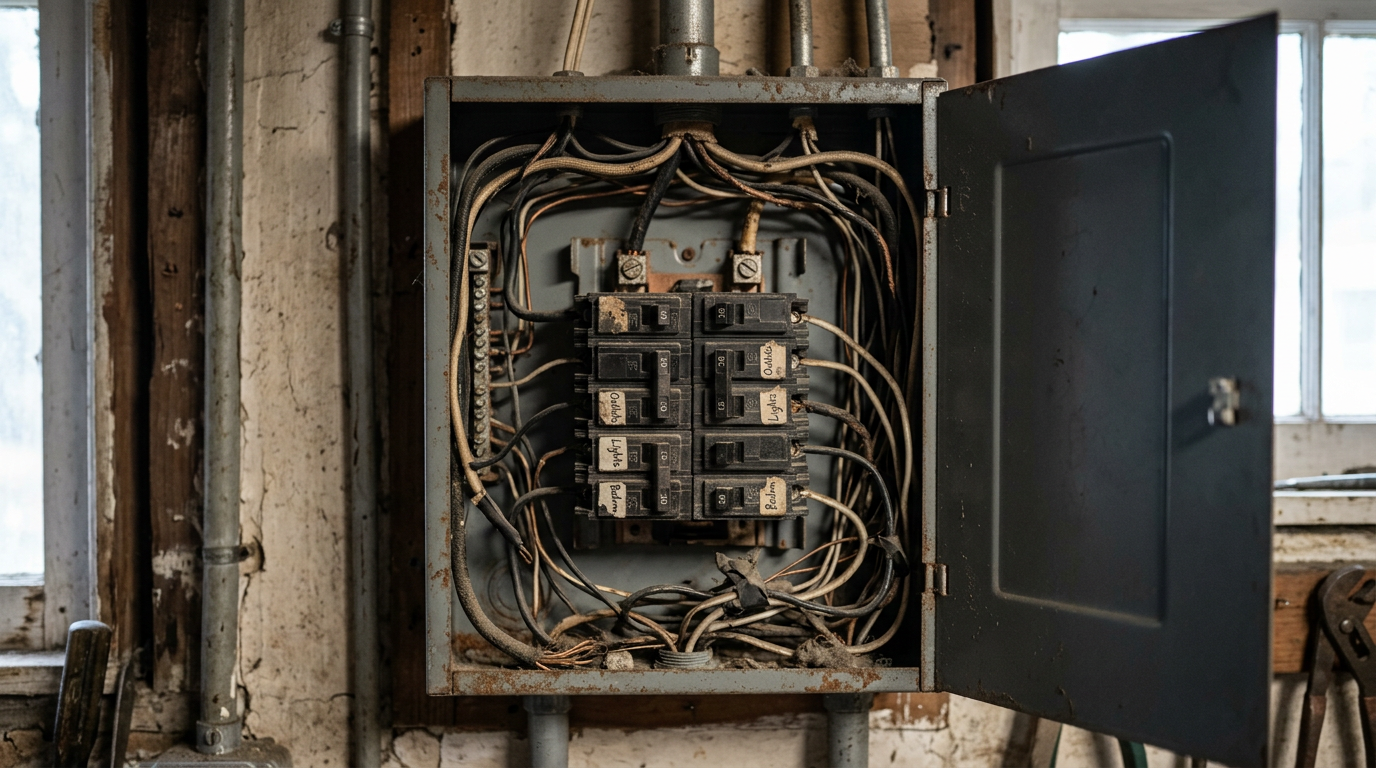
The outdoor condenser unit pushes the heat pulled from your home back outside. If the condenser coils are caked with dirt and debris, that heat has nowhere to go and the system blows warm air. A tripped breaker at the outdoor disconnect box or a failing compressor can also shut down cooling entirely.
Start by checking the outdoor disconnect box for a tripped breaker — it takes under a minute and no tools. If the breaker is fine, look at the condenser unit for heavy debris buildup. A compressor failure or an electrical problem that keeps coming back needs a licensed technician to sort out.
How the Onset of the Problem Narrows It Down
The way the problem started is useful diagnostic information. Warm air that comes on suddenly points most directly to a thermostat mode change or a tripped breaker, both of which you can check in under a minute. If the problem is with the outdoor unit specifically, the likely causes narrow further to condenser coil buildup and compressor or breaker failure. A gradual drop in cooling over time is more likely a dirty filter, dirty coils, or refrigerant slowly leaking out.
What to Fix Yourself and When to Call a Technician
Most warm-air problems come down to something simple: a missed thermostat setting, a clogged filter, or coils that haven’t been serviced in years. All of those are either a quick settings check or a filter swap. The causes that aren’t simple — refrigerant leaks and compressor failure — require a licensed HVAC technician to diagnose and repair. If you’re weighing whether the repair cost makes sense relative to the age of your system, it’s worth reading through this guide to deciding whether to repair or replace your HVAC system before calling anyone. Knowing which category your problem falls into is the practical outcome of working through this list, and it gives you a clear answer on whether to keep troubleshooting or pick up the phone.