Bathroom Remodel vs. Renovation: What’s the Difference and Which Do You Need?
A renovation updates surfaces, fixtures, and finishes without touching the layout. A remodel changes the layout — moving plumbing or electrical, or altering the structure of the space. The distinction matters before you start planning or budgeting, because misclassifying the project leads to the wrong contractor, missed permits, and timelines that don’t hold.
What Each Project Type Actually Involves
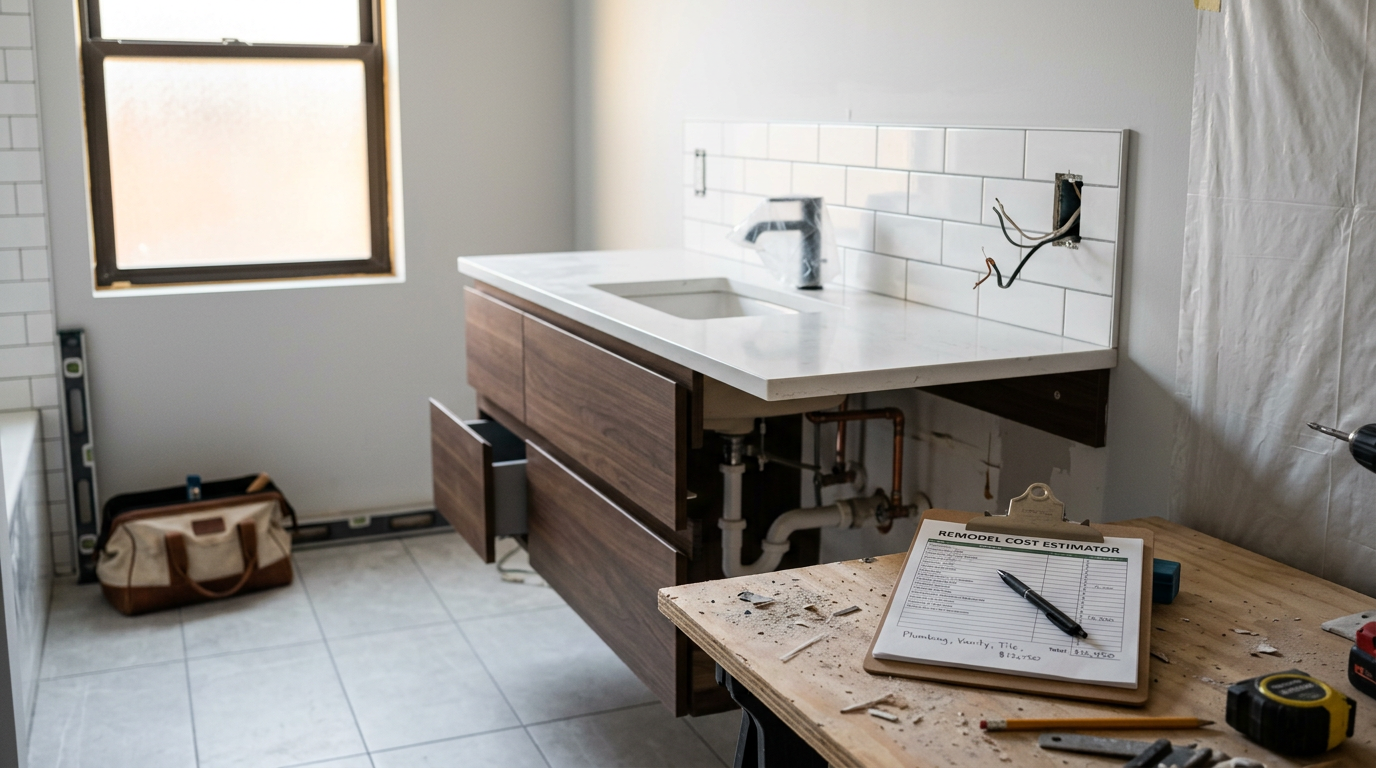
A renovation covers everything that refreshes the space without changing how it’s arranged: replacing tile or flooring, repainting or refinishing surfaces, swapping out a vanity, mirror, or light fixtures, upgrading hardware and faucets, or replacing a toilet or tub in the same location. No pipes move, no walls come down, and no permits are typically required. Cost range is $5,000–$15,000, and the timeline runs from days to a few weeks depending on scope.
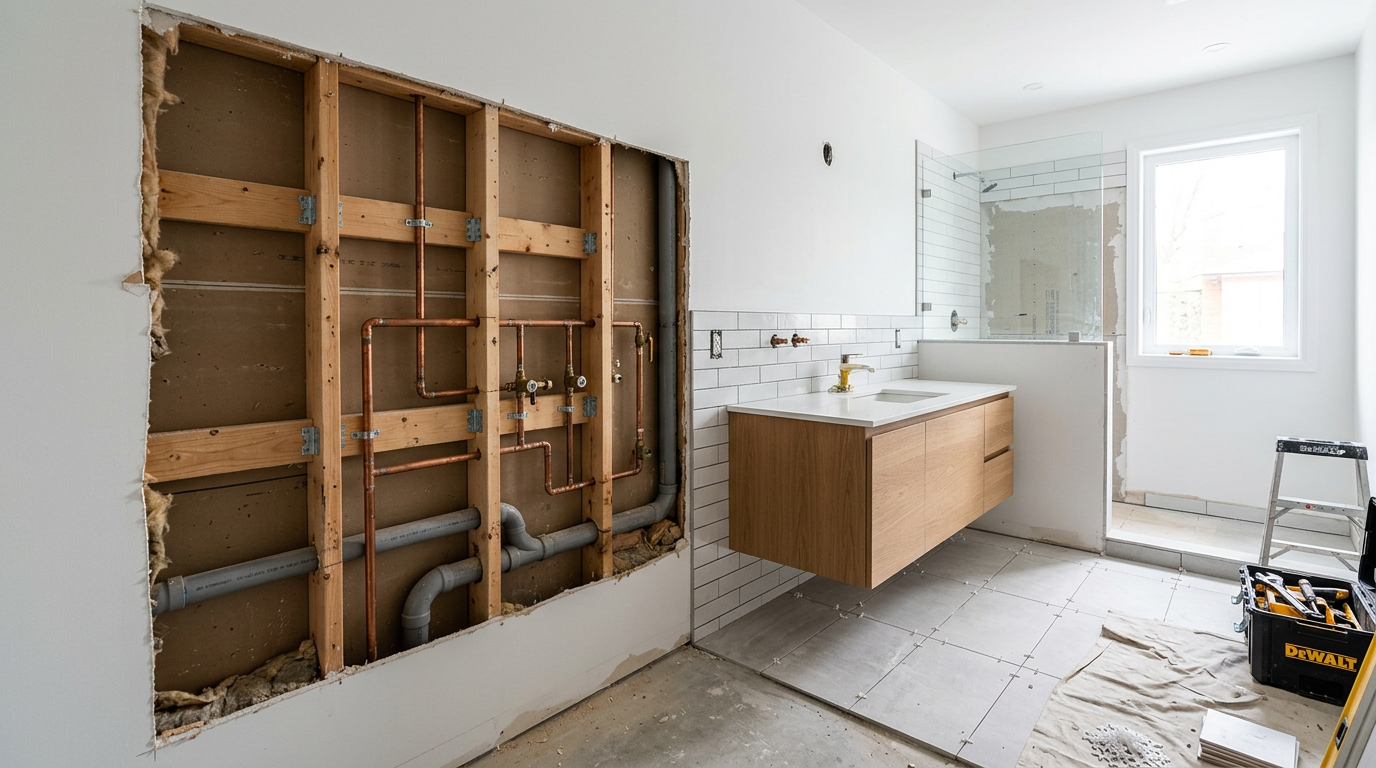
A remodel goes further. It changes the layout or structure of the space — moving walls or expanding square footage, relocating plumbing lines or drain positions, rewiring electrical or adding circuits, converting a tub/shower configuration, or adding and repositioning windows or doors. That work requires permits in most areas, licensed subcontractors, inspections, and more lead time. Costs run higher than a renovation, driven by structural and trade labor. Timeline extends to weeks or months.
Why Getting the Classification Right Matters for Permits and Contractors
Any project that touches plumbing, electrical, or structure triggers permit requirements that surface-only work doesn’t. If you misclassify the project, you might skip required permits, set a timeline that doesn’t account for inspection holds, or hire the wrong contractor entirely.
A general handyman or tile contractor can handle most renovations. A remodel needs a licensed general contractor who coordinates plumbers, electricians, and possibly structural work. Starting with the wrong project type in mind leads to mid-project scope changes that cost more than getting it right from the start. Before signing anything, review the key questions to ask a contractor before hiring to make sure you’re bringing in the right professional for the scope of work.
How Budget and Layout Determine Which Project You Need
Three factors drive the decision. The first is budget. If you’re working in the $5,000–$15,000 range, a renovation is the realistic scope — a remodel’s structural and trade costs push well past that. For a detailed breakdown of what drives those numbers up or down, see this guide on bathroom remodel costs at every budget level.
The second is whether the current layout works. If the bathroom functions well enough, a renovation handles the cosmetic issues without the cost of structural change. If the layout itself is the problem — a poorly placed door, a tub that should be a shower, not enough clearance — a remodel is the only way to fix it.
The third is your long-term plans for the space. A renovation makes sense when you want to refresh the look and replace worn finishes. A remodel makes sense when you need to change how the space actually functions.
The Same Distinction Applies Beyond Bathrooms
The renovation/remodel line isn’t specific to bathrooms. The same logic applies to kitchens, bedrooms, basements, and any other room. Renovation means surface updates without structural change. Remodel means changing how the space works through layout, structural, or systems modifications. These are not synonyms, and the dividing line is always the same: does the project change the layout or structure, or does it update finishes within the existing footprint?
How to Decide: Renovation or Remodel for Your Bathroom
If your budget is in the $5,000–$15,000 range and the existing layout works, renovate. If your goal is cosmetic — updated tile, a new vanity, refreshed finishes — a renovation covers it without the cost or complexity of structural work.
If the current layout doesn’t work — fixtures are poorly positioned, the configuration is wrong, or the space needs structural changes to function the way you need it to — a remodel is the only path forward. Converting a tub to a walk-in shower, relocating the toilet, or expanding the footprint all require it. Understanding what drives up the cost of home renovation and how to budget for it will help you plan more accurately before committing to either path.
Renovation vs. Remodel: Which One Fits Your Bathroom
Start by asking whether the layout works. If it does, a renovation in the $5,000–$15,000 range handles cosmetic updates without permits or licensed trade contractors. If the layout is the problem, budget for a remodel — relocating plumbing, modifying electrical, or moving walls requires licensed labor and permits, and costs climb accordingly. Once you know which project type you’re dealing with, you’ll know which contractor to call and what the planning process actually looks like.