Most homeowners pay between $175 and $450 per plumbing project, with hourly rates running $45 to $200 depending on licensing level, timing, and location. Before you call for a quote, it’s worth understanding how those numbers are built — because the hourly rate is only part of what you’ll actually pay.
What Plumbers Charge: Rates, Fees, and Job Totals
Plumber pricing in 2026 works across three overlapping structures: an hourly labor rate, a service call fee, and a per-job total that combines both with materials.
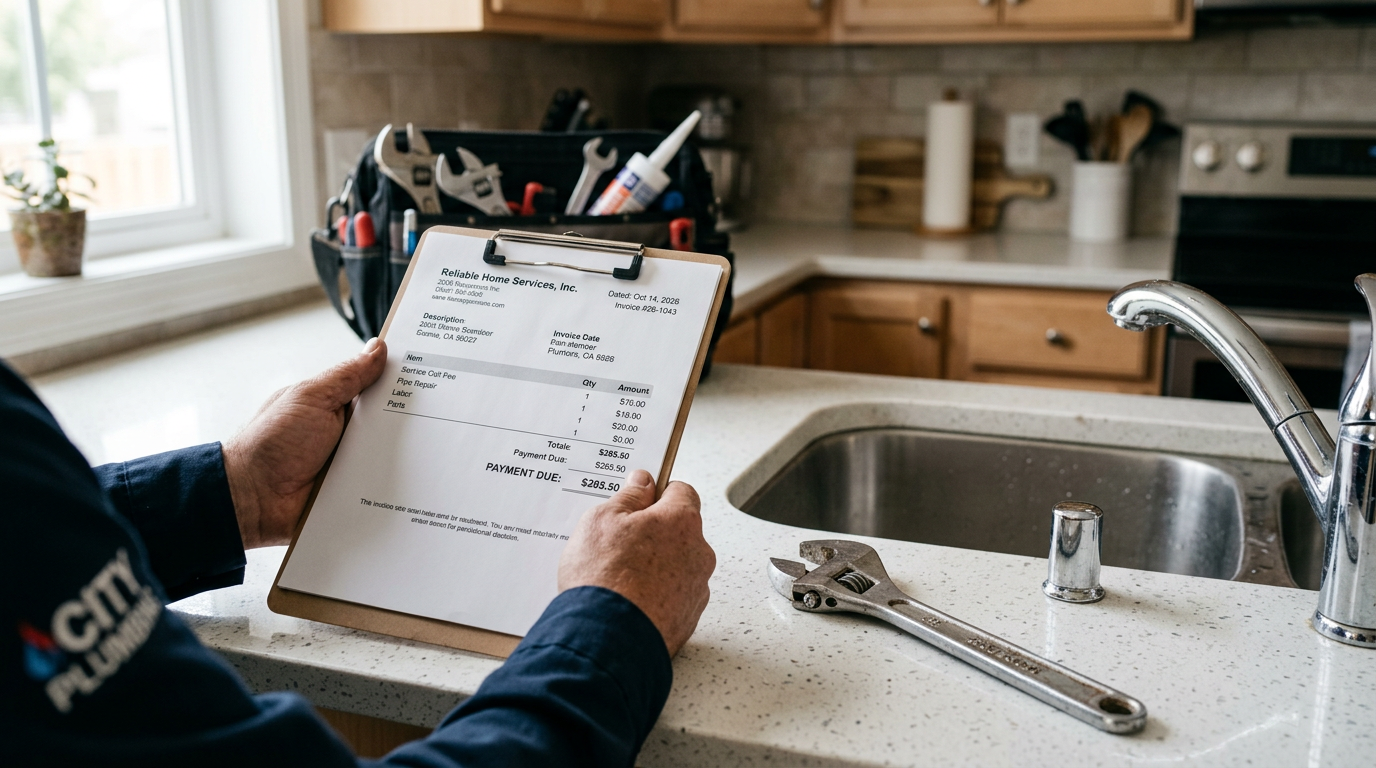
Standard plumbers bill $45–$150 per hour; master plumbers bill $100–$200 per hour. Jobs that require permits or involve complex system work typically require a master plumber, which pushes the hourly cost toward the top of the range. On top of the hourly rate, most plumbers charge a service call or trip fee of $50–$150 — a flat charge billed before any work begins, regardless of how long the job takes. When you add labor and basic materials together, most repair jobs land between $150 and $700, averaging around $350.
The service call fee matters more than it might appear. On a 30-minute repair, a $100 trip fee can effectively double the labor cost. On a three-hour job, it barely moves the total. Short jobs cost more per hour than the hourly rate alone suggests — that’s a function of the flat fee structure, not the plumber’s rate. Understanding common plumbing issues homeowners overlook can help you decide whether a problem warrants a service call or can wait to be bundled with other work.
How Licensing Level, Location, and Job Type Shift the Final Number
The national range of $45–$200 per hour is a starting point, not a guarantee. High-cost cities often push rates above $200 per hour, while rural or lower-cost markets frequently come in below $75 per hour. Where you live determines where your job falls within that range, so getting local quotes before assuming the national figures apply is worth doing.
Job type also affects the total independently of the hourly rate. Minor repairs typically land at the lower end of the $150–$700 range. Larger projects — pipe replacements, fixture installations — push toward or beyond the upper end. That spread reflects both job complexity and hours billed, not just what the plumber charges per hour. If you’re weighing whether to tackle a minor repair yourself, reviewing the key factors in the DIY vs. contractor decision can help you assess whether the job is within reach or better left to a licensed plumber.
What Emergency and After-Hours Service Actually Costs
Emergency and after-hours calls carry a premium of 1.5x–2x the standard hourly rate, applying on evenings, weekends, and holidays. That premium works as a multiplier, not a fixed surcharge, which means the dollar amount it adds grows with the length of the job.
In practical terms: a standard hourly rate of $45–$150 becomes $68–$300 per hour under emergency pricing. A job that would run $150–$300 at standard daytime rates can cost $225–$600 or more after hours. The longer the job, the more that multiplier compounds. Many emergency calls involve water leaks — knowing how to detect a water leak in your home early can help you catch problems before they escalate into after-hours emergencies.
Getting Your Quote in the Right Range
Plumber rates reflect licensing level, timing, and local market conditions — none of those factors are negotiable, but knowing them puts you in a better position to evaluate what you’re quoted. The most useful step before hiring is collecting multiple local quotes, confirming whether the service call fee is included in the estimate, and asking whether the job requires a master plumber. That combination tells you whether a quote is reasonable or worth pushing back on.