What Drives Up the Cost of Home Renovation — and How to Budget for It
Renovation costs are shaped by a mix of variables: the scope of your project, the condition of your home, the materials you choose, and factors entirely outside your control, like inflation and regional labor markets. Understanding what’s driving the number on a contractor quote — and what could push it higher once work begins — is what makes the difference between a budget that holds and one that doesn’t.
The Five Variables That Determine What a Renovation Costs
Every renovation budget is built from the same core variables, though not all of them are equally within your control.
Project scope, materials, and labor are the three you have the most influence over. Scope defines how much work gets done. Material choices set the cost floor and ceiling. Labor rates determine what execution costs, separate from materials entirely. Fixture and finish decisions alone can move a price range dramatically, which is why two kitchens with identical footprints can carry very different price tags.
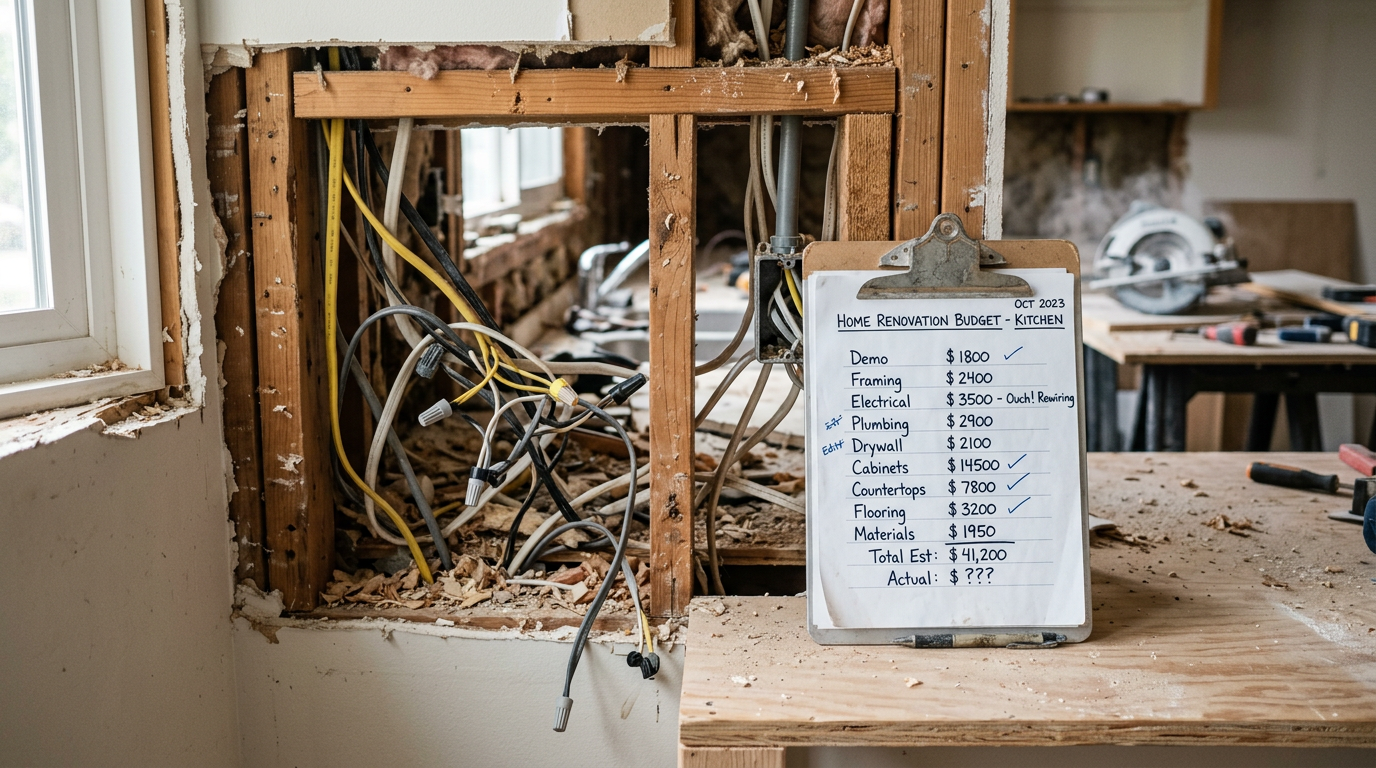
Hidden structural conditions are a different category of cost — one you can’t price in advance. Outdated electrical panels, aging plumbing, and failing HVAC systems often don’t surface until work has already started. When they do, they have to be addressed before finish work can move forward, which means they expand the original budget whether or not you planned for them.
Permitting and code compliance costs are separate from construction costs and need to be treated that way. Most renovations that touch electrical, plumbing, or structural work require permits, and meeting code may require work that wasn’t part of the original plan. These costs should be confirmed and budgeted as their own line item before work begins.
Macroeconomic factors — inflation and interest rates — affect pricing regardless of any decision you make at the project level. The same renovation can carry a meaningfully different price tag depending on when you do it. You can adjust scope or swap materials, but you can’t negotiate away broader economic conditions, which is why they need to be treated as fixed constraints rather than variables.
Regional labor market conditions round out the picture. Labor rates and contractor availability vary significantly by location, and regional demand affects pricing in ways that have nothing to do with your project scope or material choices.
How Structural Risk and Trade Coordination Scale With Project Size
The cost variables above apply to every renovation, but their relative weight shifts depending on the scale of the project.
For a single-room renovation — a kitchen or bathroom — scope and material selection are the dominant cost drivers. If you’re planning a bathroom project, understanding the full range of bathroom remodel costs at every budget level can help you set realistic expectations before you request a single quote. Structural discoveries are possible but less likely to be budget-defining at this scale.
For a whole-home remodel, the odds of uncovering outdated electrical, plumbing, or HVAC systems increase with the scope of work. Structural discoveries stop being a minor contingency and become a real budget risk. Coordinating multiple trades at once also makes regional labor availability a more significant factor, particularly in markets where skilled contractors are difficult to book.
Cost-per-square-foot estimates are a useful starting point in either case, but they don’t account for hidden structural conditions, permitting requirements, or economic timing. All three can push the final number well above any per-square-foot figure.
How to Apply This When Building or Reviewing a Budget
The most practical way to use this framework is to treat each cost category as a distinct budget line rather than folding everything into a single estimate. Permitting and code compliance costs should be confirmed before work begins. Structural discoveries should be covered by a dedicated contingency — separate from the base project estimate — because there’s no way to price them in advance.
The variables you can control, scope and material selection, are where your budget decisions carry the most leverage. The variables you can’t control, regional labor markets and macroeconomic conditions, should inform your timing decisions and set your expectations for the pricing environment you’re working within. Knowing which season offers the best contractor availability and pricing for your project type is one of the most actionable ways to work with market conditions rather than against them.
This framing is useful at several points in the planning process: when building an initial budget, when comparing contractor quotes to check whether permitting costs are included or billed separately, when weighing a room-level renovation against a whole-home remodel, and when deciding whether current market conditions make it worth moving forward now or waiting.
Before you sign any contract, it’s also worth knowing the right questions to ask a contractor before hiring — particularly around how they handle permitting, subcontractor use, and payment terms — so you can compare quotes on equal footing and avoid surprises once work begins.
Build Your Renovation Budget Around the Costs You Can’t Negotiate Away
Permit fees, contingency reserves, regional labor rates, and economic timing all shape the final cost of a renovation in ways that go beyond material choices alone. The most important structural move in any renovation budget is separating what you can control from what you can’t — and giving each its own line item. Before work begins, confirm your permitting costs, set aside a dedicated contingency for structural discoveries, and account for where regional labor markets and current economic conditions are putting pressure on pricing.