Catching roof problems early can prevent far more expensive damage later. The signs below cover both surface-level wear and structural failure — because the distinction between the two determines whether you’re looking at a repair or a full replacement.
The Nine Warning Signs That Point to Roof Replacement
Age is the first thing to check. Asphalt shingles last 20–30 years, wood shakes 20–25 years, metal roofing 40–70 years, and tile or slate 50 or more years. If your roof is at or past those ranges, replacement is probably due even if it looks fine from the outside.
Structural problems are the most urgent category. If the roof deck visibly dips, feels spongy underfoot, or the roofline looks warped, the decking or underlying supports have failed and the roof is at risk of partial or full collapse — this needs immediate attention. Similarly, if you can see daylight coming through the roof boards while standing in the attic, the deck has gaps or rot severe enough to compromise the whole structure, and water and pests are already getting in through those same openings.
Leaks and interior moisture are the next tier to assess. A leak that returns in the same spot after being patched, or multiple leak points appearing across the ceiling, means the roof has failed beyond what targeted repairs can fix. Brown water stains on interior ceilings, or moisture, mold, or wet insulation in the attic, point to water getting in consistently — not from a single isolated breach. If you’re dealing with active interior water damage, understanding what to do immediately after water damage appears in your home can help you limit the harm before a contractor arrives.
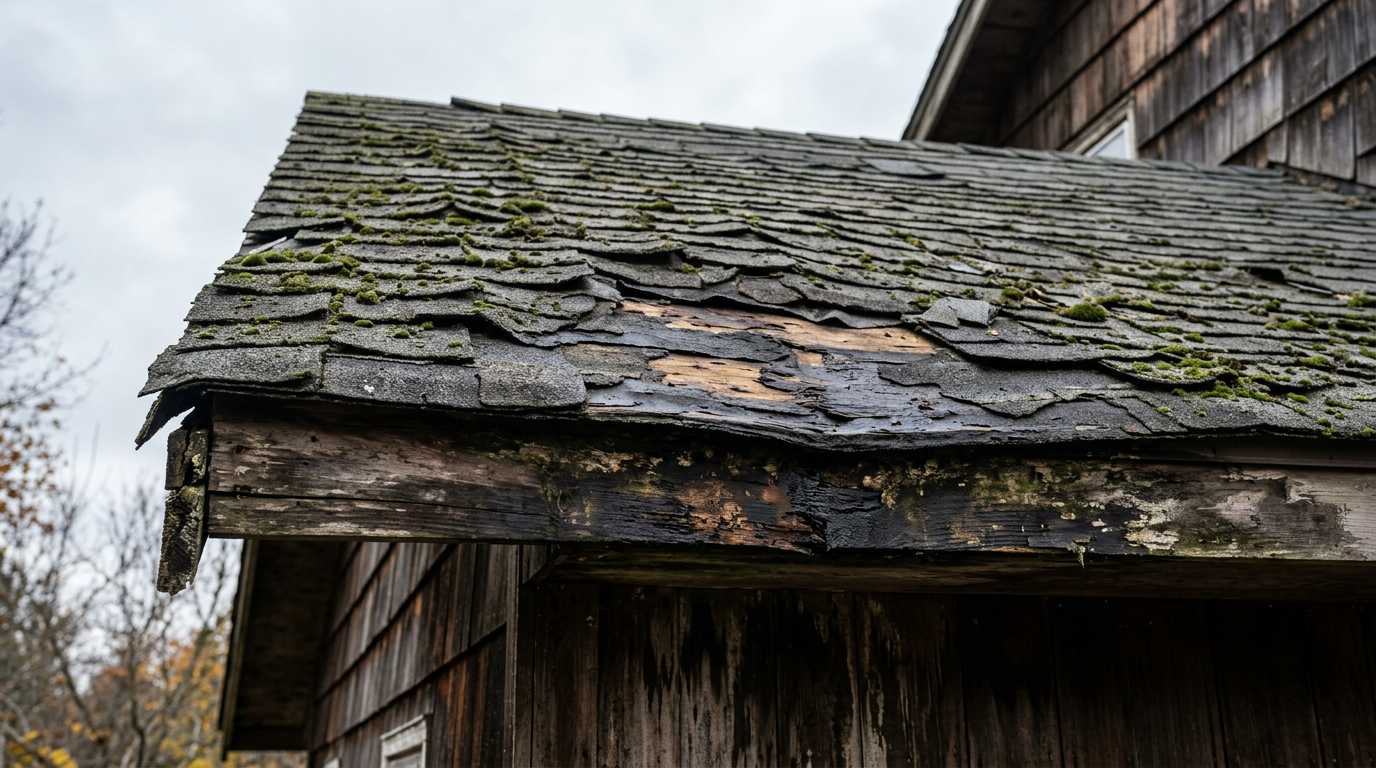
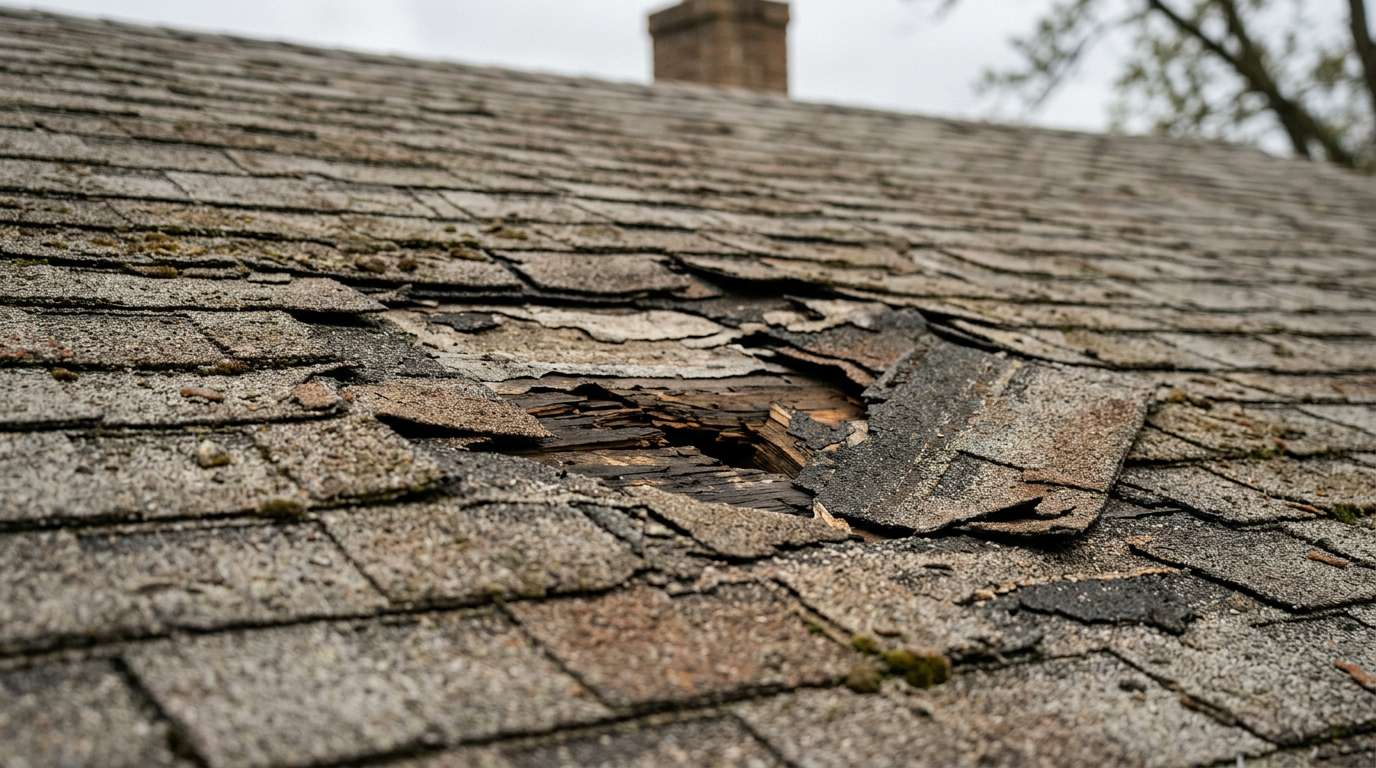
Surface deterioration across multiple areas of the roof is the clearest sign that the material itself has broken down. Missing, cracked, curling, buckling, or blistering shingles on more than one slope indicate system-wide failure, not localized wear — patching won’t fix the underlying problem. Heavy granule loss in gutters or at downspout exits means the protective surface layer on asphalt shingles is gone and they’re no longer functioning. Widespread moss or algae covering large portions of the roof holds moisture against the shingle surface and accelerates breakdown, and when either has spread extensively, the material underneath is likely already compromised. Failed flashing — cracked, lifted, or missing at chimneys, vents, or skylights — in multiple spots signals age-related breakdown across the whole roof system, not just one repair point.
Repair vs. Replacement: Where the Line Falls
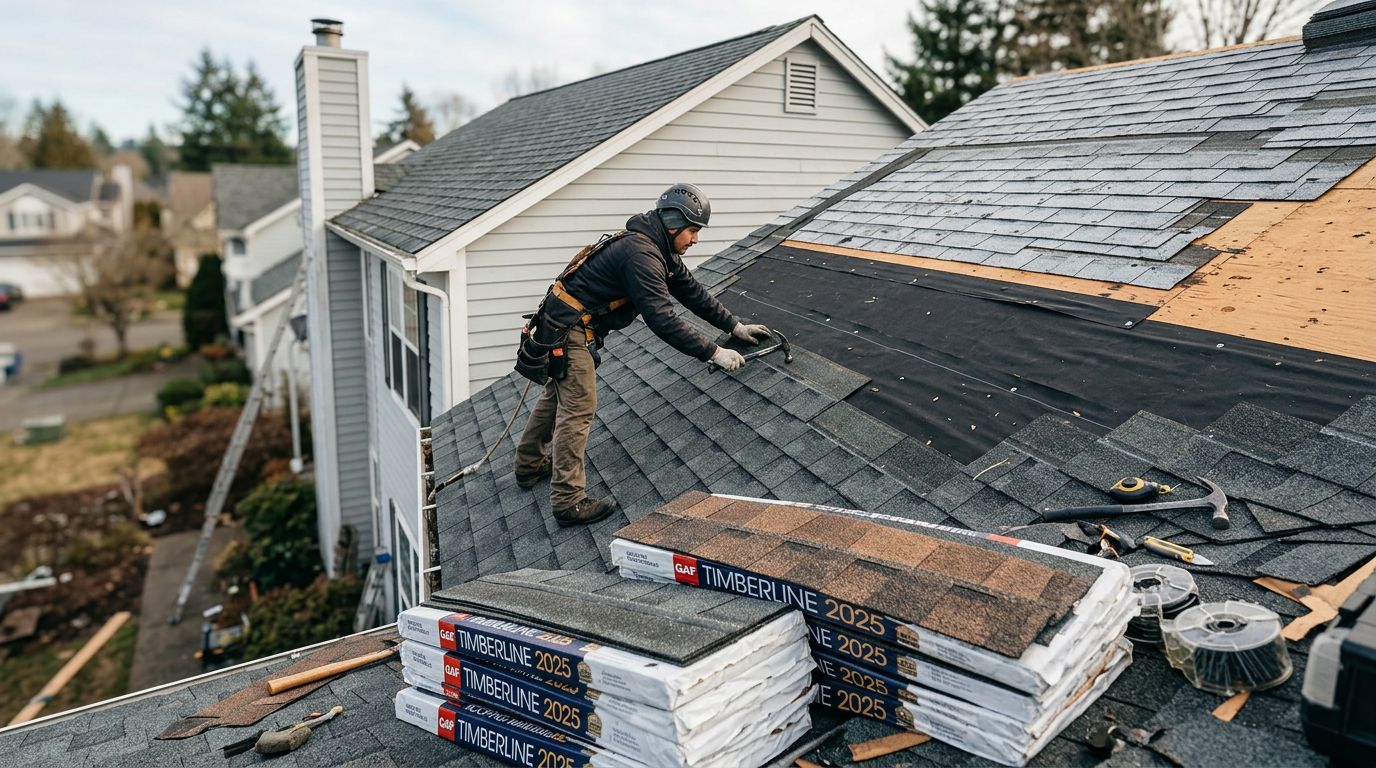
The repair-or-replace decision comes down to how widespread the damage is and whether structural signs are present. Isolated damage — a single missing shingle, a contained ceiling stain with no attic moisture, or granule loss limited to one slope — points toward repair. The situation shifts toward replacement when the same type of damage appears in multiple areas, when structural signs are present, or when repairs have already been attempted without lasting results. For a detailed breakdown of the cost thresholds and benchmarks that separate repair from replacement, see this guide on how to decide between roof repair and full replacement. When more than one of the nine signs above is present at the same time, the roof has failed beyond what targeted repairs can address.
Structural signs and surface signs also indicate different timelines. Sagging, soft spots, and daylight through attic boards mean the structure is already failing and require faster action. Granule loss, moss, and dark streaking point to advanced wear that may still give you a window to plan a replacement.
When to Run Through This Assessment
This checklist is most useful in four situations: before calling a roofing contractor, so you know what you’ve already observed; after noticing a ceiling stain or interior water damage, to determine whether the source is isolated or part of a larger pattern; when your roof is approaching or has passed its expected lifespan, to see whether visible wear confirms it’s time to replace; and after a significant weather event, to check for new damage across the exterior slopes, flashing, and gutters before conditions worsen.
Starting From the Attic Before You Call a Contractor
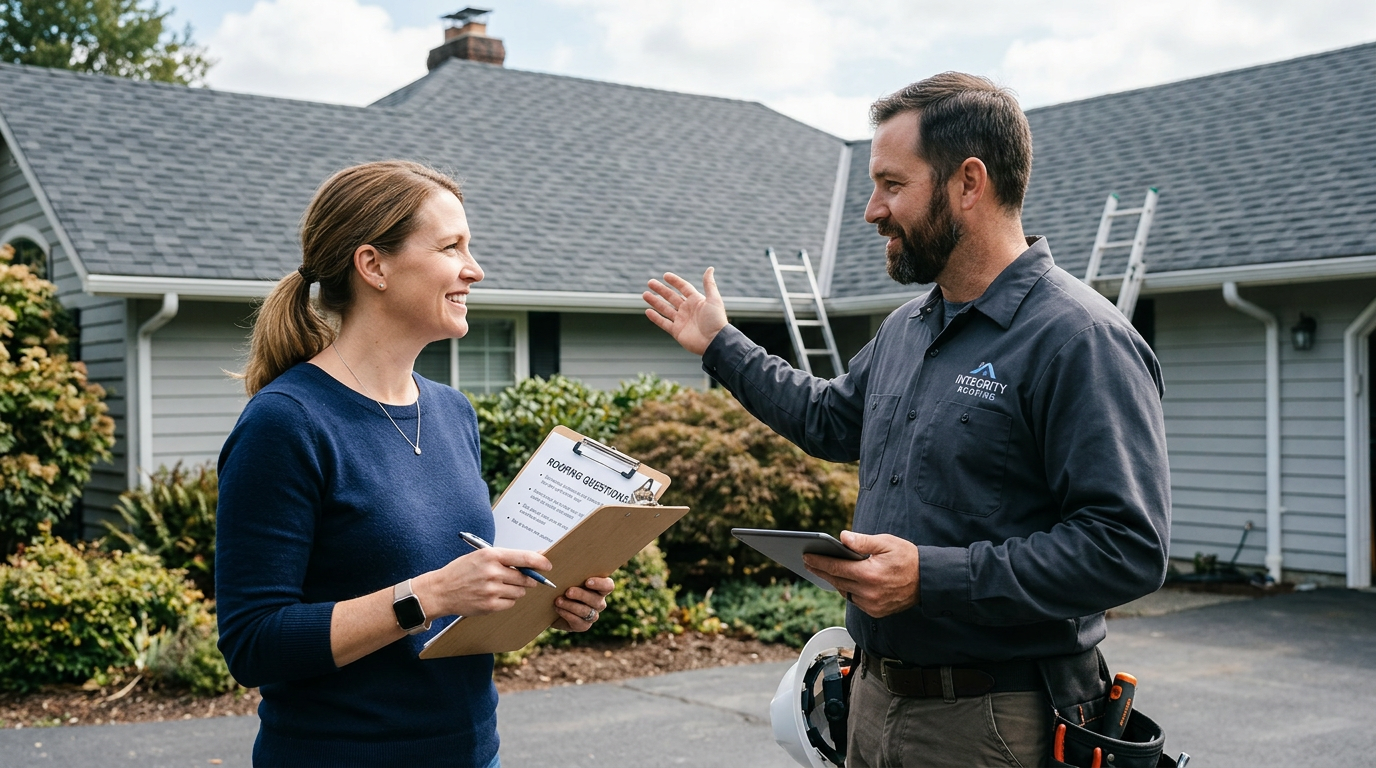
Structural red flags — sagging decking, soft spots, daylight through attic boards — require faster action than surface wear like granule loss or moss. But the most useful thing you can do before calling a contractor is look at both together. A roof failing on multiple fronts, regardless of age, has reached the end of its useful life. The attic is the best place to start: it reveals structural and moisture problems that aren’t visible from the outside, and it gives you a clearer picture of what to raise when you speak with a roofing professional. Knowing which questions to ask a roofer before hiring will help you get more useful answers once you’ve completed your own assessment.