DIY vs. Contractor: How to Decide Which Is Right for Your Project
The choice between doing it yourself and hiring a professional comes down to four factors: skill level, project complexity, budget, and safety. These aren’t equally weighted — some override others entirely — and working through them in the right order is what makes the decision clear.
The Four Factors, in the Order They Matter
Skill level is the first filter. If you have direct experience with the task — you’ve tiled a floor, patched drywall, or installed fixtures before and gotten acceptable results — DIY is on the table. If you haven’t done it before and a mistake would require a professional to fix anyway, the decision is already made. Confidence isn’t a substitute for demonstrated ability, and no other factor overrides a skills gap.
Project complexity is the second consideration. Single-trade, low-consequence tasks with clear instructions and widely available materials — painting, basic landscaping, replacing hardware, installing a ceiling fan in an existing fixture — are reasonable DIY candidates. Multi-step projects that involve sequencing across trades, affect structural integrity, or require inspections at any stage call for professional oversight. If a project has more than two interdependent phases, that complexity alone shifts the call.
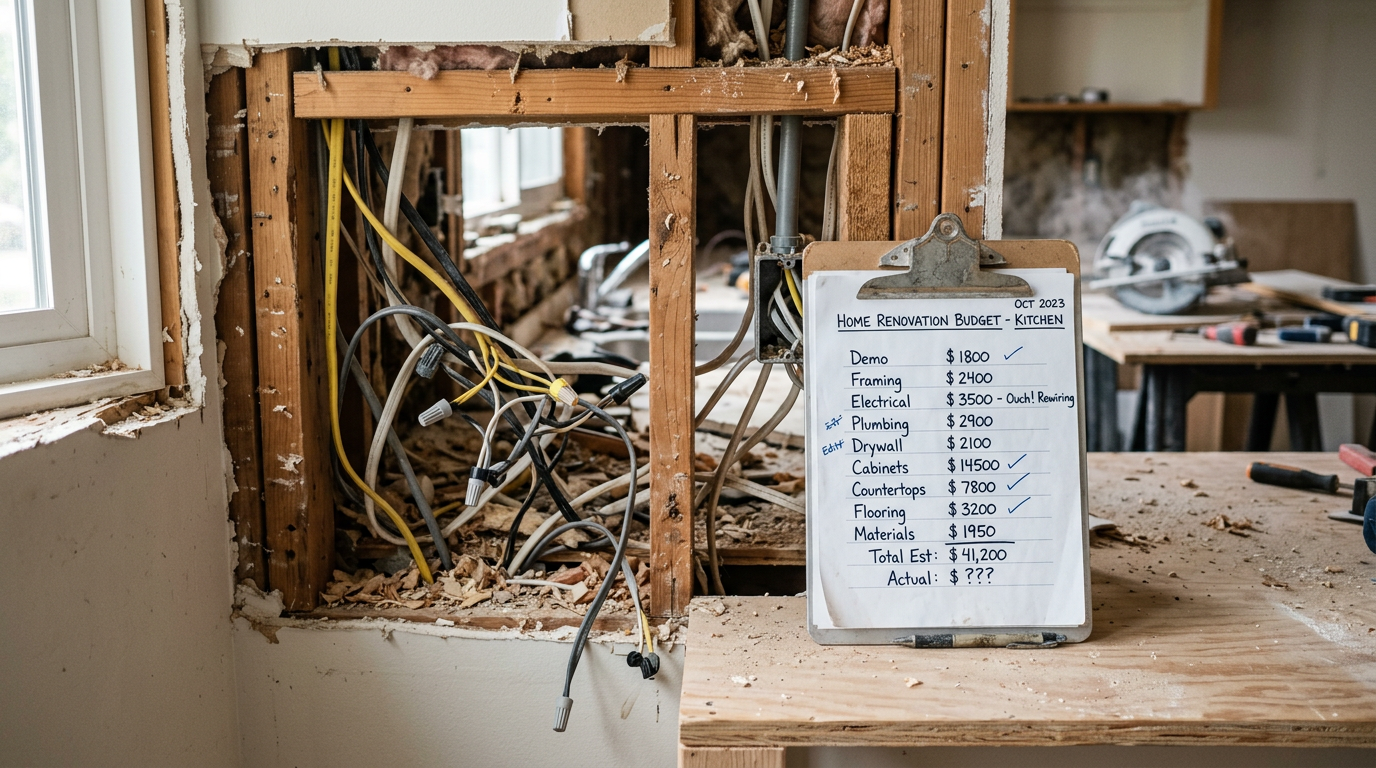
Budget requires honest accounting. Labor is the biggest cost on most projects, so for straightforward tasks where your time is available and the margin for error is low, DIY cuts total spend meaningfully. On larger or more complex projects, that math reverses. Material waste, rework, and the time cost of learning on the job can push DIY spend above a professional quote before the project is finished. Professionals also warranty their work; DIY doesn’t come with that. A project a professional finishes in two days may take a first-time DIYer a full weekend or longer, which extends disruption and delays use of the space — time is a real cost. Understanding what drives up the cost of a home renovation and how to budget for it can help you run a more accurate comparison before committing to either path.
Safety and risk sits outside the trade-off logic entirely. For projects with no structural, electrical, or plumbing components and no permit requirements — where a mistake is correctable without safety consequence — DIY remains viable. For everything else, it isn’t. Electrical work, plumbing, gas lines, load-bearing modifications, and any project requiring a permit or licensed inspection are not judgment calls. Mistakes in these areas create liability, code violations, and physical danger that no amount of cost savings justifies. This isn’t a preference; it’s a hard line.
Why Safety Isn’t a Weighted Factor
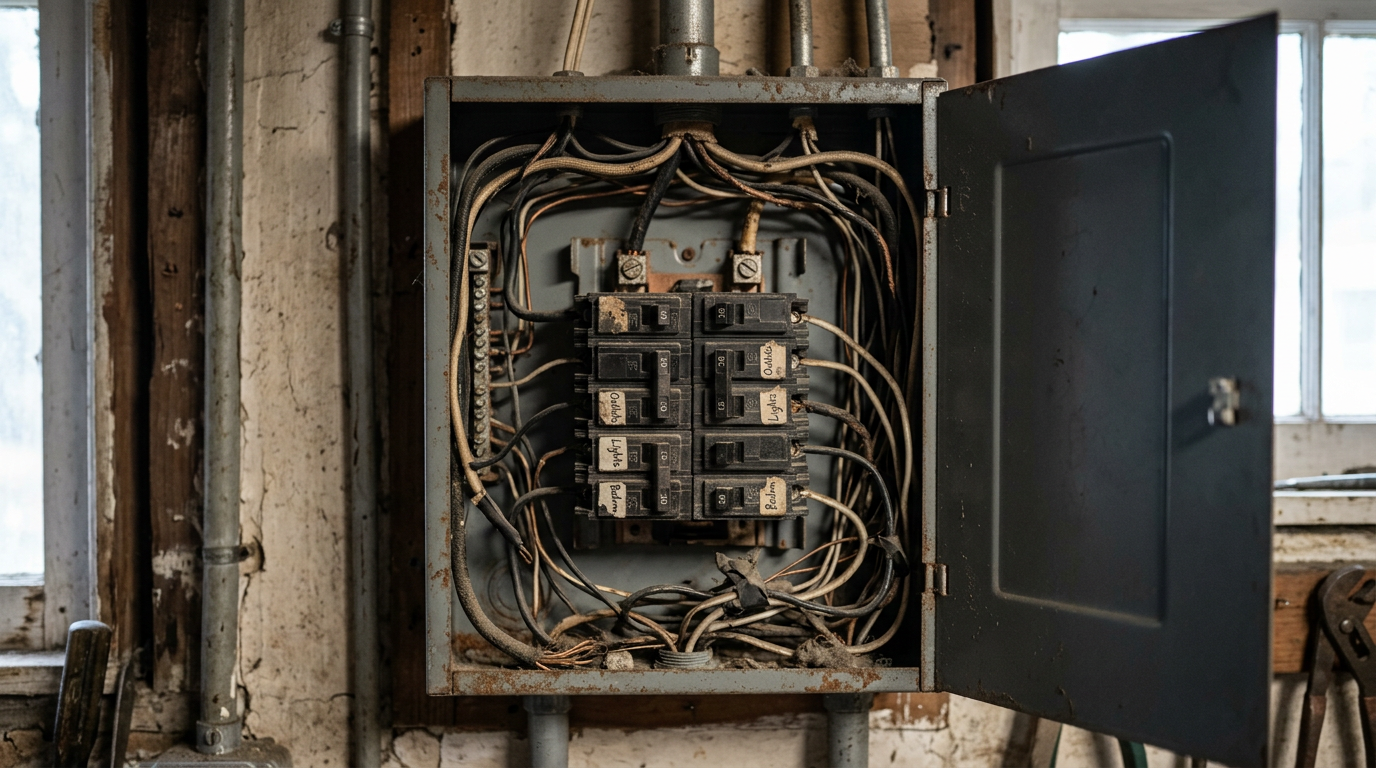
A simple pros-and-cons list treats every factor as negotiable. This framework doesn’t, because the factors don’t carry equal weight. Safety and risk sits outside the cost-benefit calculation entirely — no combination of available time, moderate skill, or favorable budget changes the outcome when electrical, plumbing, gas, or permitted work is involved. Treating it as one consideration among several creates a false equivalence that the actual stakes don’t support. For example, common electrical issues in older homes illustrate exactly why this work requires a licensed professional rather than a confident DIYer.
General Contractor vs. Managing Subcontractors Yourself
When a project requires professional involvement, there’s still a decision to make about how to structure that. A general contractor manages scheduling, subcontractors, and project accountability under one point of contact. That adds a coordination markup but removes the homeowner from day-to-day management. Homeowners who hire subcontractors directly or handle portions of the work themselves can reduce cost, but they take on the full burden of sequencing, quality control, and any gaps between trades.
Where This Decision Comes Up Most
This framework applies directly to the situations homeowners encounter most often: planning a kitchen or bathroom renovation and weighing whether professional quality and warranty coverage justify the cost over DIY labor savings; deciding whether to repair a leaking fixture or call a licensed plumber before the problem worsens — in many cases, fixing a dripping faucet is something most homeowners can handle without calling a plumber; evaluating whether adding a room or modifying a load-bearing wall requires permits, inspections, or licensed trade involvement; and assessing whether experience with a specific task is sufficient, or whether a first attempt on a high-consequence project creates more financial risk than hiring a professional from the start. Moderate skill transfers to low-complexity, single-trade work — it doesn’t transfer to projects requiring permits, inspections, or coordination across trades.
Matching Skill Level to Consequence, Not to General Confidence
Start with skill level and safety — those two filters eliminate most of the ambiguity. If the project involves electrical, plumbing, gas, load-bearing work, or permits, hire a licensed professional regardless of budget or confidence. If it clears those thresholds, evaluate complexity and run the actual cost comparison, including your time and the risk of rework. For your next project, identify which category it falls into before pricing anything — that sequence keeps the decision grounded in what actually matters.